
Blog
Moka Pot vs Espresso Machine: Which Is Right for You?
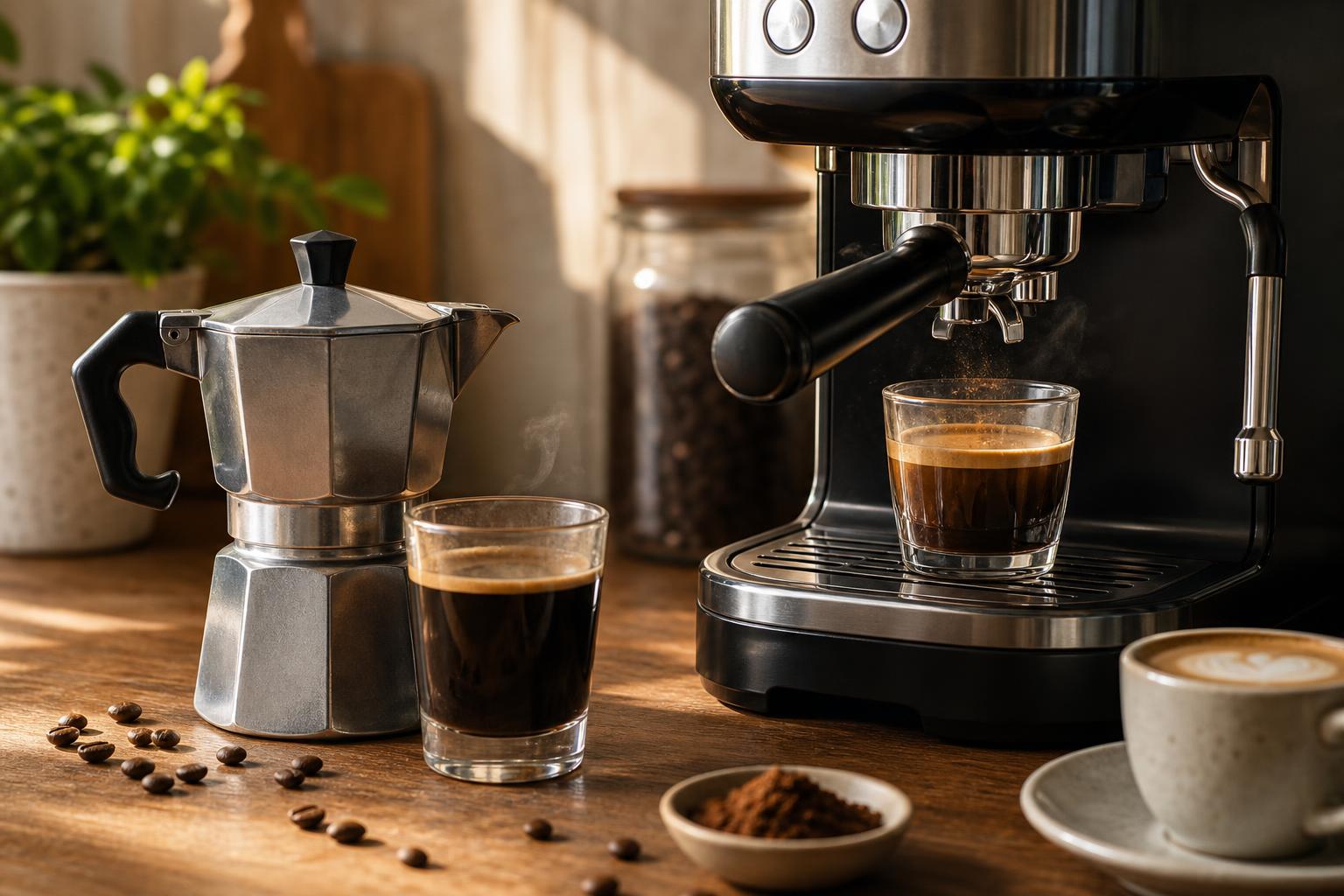
Compare moka pots and espresso machines by flavour, cost, convenience, maintenance and milk drinks to choose the best home coffee setup for you.
Choosing between a moka pot and an espresso machine depends on the coffee you enjoy, the time you have and how involved you want your daily routine to be. Both can produce satisfying Italian-style coffee at home, but they differ in flavour, technique, space, cost and versatility.
Moka Pot vs Espresso Machine: Which Is Better?
A moka pot is a compact stovetop coffee maker that brews a concentrated, full-bodied drink. It suits people who want a simple, reliable and affordable setup.
An espresso machine forces hot water through finely ground coffee under pressure. Depending on the model, it can also prepare cappuccino, caffè latte and macchiato.
Choose a moka pot if simplicity, compact storage and value matter most. An espresso machine is usually a better fit if you enjoy café-style drinks and are willing to learn more technique.
Explore the related selection here: ESE Pod Coffee Machine Buying Guide.
Explore the related selection here: How to Descale a Coffee Machine Safely.
Explore the related selection here: ESE Pod Size: Check Machine Compatibility First.
Explore the related selection here: Pressurised vs Non-Pressurised Espresso Baskets.
How Each Brewing Method Works
A moka pot has a lower water chamber, a filter basket and an upper chamber for brewed coffee. As the water heats on the hob, pressure pushes it through the coffee and into the upper section.
For consistent results, fill the lower chamber to the safety valve, fill the basket evenly without tamping and use gentle heat. Remove the pot when most of the coffee has passed through, especially if you hear loud bubbling.
An espresso machine uses a pump or another pressure system to force hot water through a compact bed of finely ground coffee in a portafilter. Grind size, dose, distribution, tamping, water temperature and brewing time all affect the result.
Many machines include a steam wand or automatic milk system. These make cappuccinos and lattes possible, but they also add cleaning and practice. Neither method is automatically better; they create different coffee styles.
Key Differences at a Glance
Moka pot
- Compact and easy to store
- Usually less expensive to buy
- Works on a suitable hob
- Produces concentrated, full-bodied coffee
- Needs little equipment beyond coffee and water
- Works well for black coffee and drinks with separately heated milk
- Requires careful heat control to avoid harsh or burnt flavours
Espresso machine
- Requires more counter space
- Offers greater control over extraction
- Can make espresso, longer coffee drinks and milk-based beverages
- Often benefits from a grinder with a fine, consistent setting
- Usually needs more cleaning and maintenance
- Has a learning curve, especially when used manually
- Suits households making several different coffee styles
A moka pot is practical for a small kitchen or occasional coffee drinker. An espresso machine may be more suitable for households with several preferences or a regular interest in espresso-based drinks.
Taste, Strength and Coffee Style
Moka pot coffee is typically rich, intense and full-bodied. It is not the same as espresso, although it is concentrated and often served in small quantities. Compared with filter coffee, it generally has a heavier mouthfeel and a more pronounced roasted character.
Espresso is brewed in a smaller volume and usually in a shorter time. A well-prepared shot can have concentrated flavour, layered aroma and crema. Its character depends on the beans, grind, dose, water temperature and preparation technique.
Consider your usual drinks:
- For a small, strong black coffee, either method may work.
- For a longer drink, moka pot coffee can be diluted with hot water or combined with milk.
- For cappuccino, flat white or latte-style drinks, an espresso machine is generally more convenient.
- For traditional, robust coffee without complicated equipment, a moka pot is a natural choice.
Strength is also a matter of perception. Serving size, coffee dose and the beans used all influence the final drink, so bold flavour does not automatically mean that one method contains more caffeine in every serving.
Ease of Use and Daily Convenience
A moka pot is easy to understand but still requires attention. Add water and coffee, place it on the hob and monitor the brewing. Do not leave it unattended, and keep the handle away from direct heat.
Once familiar, the method involves no buttons, digital settings or separate accessories. This makes a moka pot appealing to people who enjoy a traditional coffee ritual.
An espresso machine can be convenient once set up, particularly for regular users. A manual model usually requires decisions about:
- Grind size
- Coffee dose
- Tamping
- Shot time
- Milk steaming
Automatic and bean-to-cup machines reduce some of this work, but they can take up more space and contain more parts to clean. Consider how much preparation you genuinely enjoy, not just how much coffee you drink.
Explore the related selection here: Coffee Machines.
Preparation Time, Cleaning and Maintenance
A moka pot generally brews within a few minutes, depending on its size and heat source. Once it cools, rinse the parts and dry them thoroughly. Avoid harsh detergents unless the manufacturer permits them. Clean it more thoroughly from time to time, and check the seal and filter for wear.
An espresso shot can also be prepared quickly, but the complete routine may include grinding beans, distributing and tamping the coffee, brewing, removing the used grounds and cleaning the group head.
If the machine has a steam wand, wipe and purge it after every use according to the instructions. Milk residue can be difficult to remove and may affect performance. Espresso machines may also need descaling and other maintenance at the intervals recommended by the manufacturer.
A moka pot generally offers the less demanding daily routine. An espresso machine requires more maintenance but provides greater versatility.
Initial Cost and Ongoing Expenses
A moka pot usually requires a smaller initial investment. If you already have a suitable hob, the main ongoing costs are coffee, replacement seals and, depending on the model, a replacement filter.
An espresso machine may require additional equipment, especially a grinder capable of producing a fine, consistent grind. Depending on the setup, you may also need a tamper, dosing accessories, a knock box and cleaning products.
Running costs depend on how often you use the equipment and whether you buy whole beans or pre-ground coffee. Choose equipment that matches your habits rather than paying for features you are unlikely to use.
A good moka pot and fresh coffee can be a practical starting point on a limited budget. Those who regularly make espresso and milk drinks may find that investing in a suitable machine and grinder is more useful over time.
Which Coffee Beans Work Best?
Freshness and an appropriate grind are important for both methods. Look for coffee from a reputable roaster or an authentic Italian coffee brand, and check the packaging for roast and preparation guidance.
For moka pot coffee beans, a medium or medium-dark roast is a useful starting point for a full-bodied, roasted profile. Lighter roasts can also work if you prefer more acidity and distinctive origin character.
Use a grind finer than filter coffee but coarser than a typical espresso grind. Coffee that is too fine can restrict the flow and create a bitter result. If buying pre-ground coffee, choose one labelled for moka pot preparation where available.
Espresso requires a fine, consistent grind. Whole beans offer more flexibility because you can adjust the grind as needed. Very dark coffee is not the only suitable choice; Italian coffee includes a range of roast profiles and blends.
Store coffee in an airtight container away from heat, light and moisture. Buy an amount you can use while it is still fresh.
When a Moka Pot Is the Better Choice
A moka pot may suit you if you:
- Want traditional Italian-style coffee without a complex setup
- Have limited counter space
- Prefer a hands-on brewing ritual
- Mainly drink black coffee or add a small amount of milk
- Want equipment that is easy to store or carry
- Are buying your first coffee maker on a modest budget
- Do not want to learn espresso extraction techniques
Choose the correct size for your usual serving. Moka pots are designed to brew their stated capacity, so using a larger pot to make a smaller amount may not produce the best result.
When an Espresso Machine Makes More Sense
An espresso machine may be the better option if you:
- Regularly drink espresso-based coffee
- Want to make cappuccinos, lattes or flat whites
- Enjoy adjusting grind size and brewing variables
- Prepare different drinks for several people
- Are willing to clean and maintain the equipment
- Have space for a machine and possibly a grinder
- Want a setup that can develop with your coffee skills
Manual machines offer more control but have a learning curve. If convenience matters most, consider whether an automatic model better matches your routine. Check the included accessories and instructions before buying.
How to Choose Between a Moka Pot and Espresso Machine
Start with your usual drink. If you mainly want strong, uncomplicated black coffee, a moka pot is likely to meet your needs. If milk drinks are central to your routine, an espresso machine provides more suitable tools.
Next, measure your kitchen. Allow room for a grinder, water-tank access and cleaning if you choose an espresso machine. A moka pot is easier to store, while an espresso machine may need a permanent position.
Consider how involved you want to be. If you enjoy weighing coffee, changing settings and learning through trial and error, an espresso machine can be rewarding. If you want fewer decisions and a familiar routine, a moka pot is more suitable.
Set a realistic budget that includes coffee, a grinder if needed and replacement parts. You do not have to choose only one method: some people use a moka pot every day and an espresso machine when they want milk drinks or a more hands-on experience.
Frequently Asked Questions
Is moka pot coffee the same as espresso?
No. A moka pot produces concentrated stovetop coffee, but it does not use the same brewing process as an espresso machine. The flavour, texture and crema are different.
Is a moka pot easier to use than an espresso machine?
Generally, yes. A moka pot has fewer settings and components. It still requires attention to grind size, heat and cleaning, while a manual espresso machine involves more variables.
Can I use espresso coffee in a moka pot?
You can, but coffee labelled for espresso may be too finely ground. Coffee specifically suited to moka pot brewing is usually a better starting point.
Which method is better for cappuccino?
An espresso machine is generally more suitable because it can brew espresso and steam milk. Moka pot coffee can be combined with heated milk, but the result will not be the same as a traditional espresso-based cappuccino.
Should I buy a grinder as well?
A suitable grinder is particularly important for espresso because grind consistency affects extraction. For a moka pot, a grinder provides freshness and flexibility, but quality pre-ground coffee can also be practical.
Final Verdict
Choose a moka pot if you value simplicity, compact storage and full-bodied Italian-style coffee. Choose an espresso machine if you want café-style espresso, steamed milk and greater control.
Both methods can make enjoyable coffee at home when paired with fresh beans, suitable grinding and careful preparation. Start with the setup you are most likely to use consistently, then build your routine from there.