
Blog
Pressurised vs Non-Pressurised Espresso Baskets
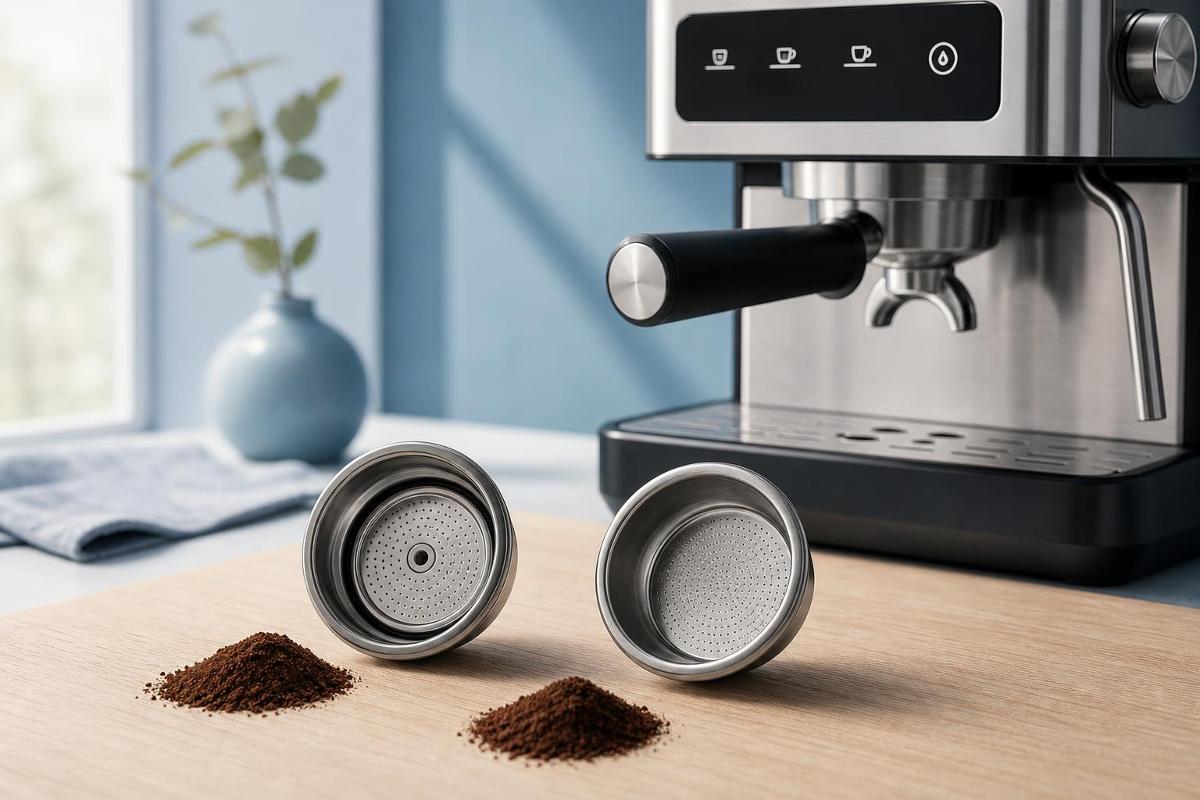
Compare pressurised and non-pressurised espresso baskets to find the right fit for your coffee, grinder, machine and experience at home.
Choosing between a pressurised and non-pressurised espresso basket depends less on which is “best” and more on your coffee, grinder and experience. A pressurised basket can make brewing more forgiving, while a non-pressurised basket gives you more control when your grind and technique are consistent. This guide explains how each type works, what equipment helps, and how to choose a basket for your home espresso setup.
What is the difference between pressurised and non-pressurised espresso baskets?
An espresso basket is the small metal filter that sits inside the portafilter. It holds the ground coffee while water is pushed through it. Pressurised and non-pressurised baskets create resistance in different ways, which affects how much the grind and coffee preparation influence the pour.
A pressurised espresso basket, also called a double-wall espresso basket, usually has an inner layer with many holes and an outer layer with a restricted exit, often a single small outlet. This design adds resistance as espresso leaves the basket.
A non-pressurised espresso basket, also called a single-wall espresso basket, has holes across its base. Water passes through the coffee and out through these holes. The ground coffee puck provides most of the resistance, so the result depends more directly on grind size, dose and preparation.
In everyday terms, a pressurised basket can help produce an espresso-like pour when the coffee is not ground quite right for your machine. A non-pressurised basket can reward careful adjustments with more control over extraction, but it also makes inconsistencies easier to notice.
Explore the related selection here: Coffee beans.
How a pressurised basket works
With a pressurised basket, the restricted outlet helps build pressure inside the basket. The basket contributes to the resistance, rather than relying entirely on a closely prepared puck of finely ground coffee.
This can be useful with pre-ground coffee, which may be too coarse, too old or simply not ground to suit your particular machine. It can also help if you are still learning how to distribute and tamp coffee evenly. Because the basket is more forgiving, you may find it easier to get a reasonably steady pour while you get to grips with your equipment.
The trade-off is that the pour may tell you less about what is happening in the coffee bed. The extra resistance can help create a layer of foam, but crema alone is not a reliable measure of flavour or extraction. A pressurised basket does not turn unsuitable coffee into freshly ground espresso coffee; it simply gives you another way to manage flow.
Some home machines come with pressurised baskets, while others offer them as an option. Basket designs vary, so check that a replacement is compatible with your machine and portafilter before buying.
How a non-pressurised basket works
A non-pressurised basket has a pattern of holes across its base, without a single restricted outlet doing the main work of creating resistance. Water meets resistance as it passes through the compacted coffee puck. Grind, dose and distribution therefore have a more direct effect on how quickly the espresso flows.
When the grind is fine enough and the coffee is prepared evenly, a single-wall basket gives you room to adjust the shot. You can change the grind or dose and observe how that affects the flow and taste. This can make it a good choice for people who want to learn more about espresso brewing and have greater control over their recipe.
It also means the basket is less forgiving. Coffee that is too coarse may allow water through too quickly. Uneven distribution or an inconsistent tamp can encourage water to find an easier route through the puck, leaving the shot fast or uneven. A capable grinder and a little patience make it easier to get consistent results.
Pressurised vs non-pressurised baskets: the practical pros and cons
Pressurised basket:
- Often more forgiving of pre-ground coffee and a less precise grind.
- Can be a convenient choice when you want a straightforward routine.
- May suit a basic grinder or a machine supplied with this type of basket.
- Offers less direct feedback about grind and puck preparation.
- Can create foam even when the coffee or extraction is not especially well balanced.
Non-pressurised basket:
- Gives you more control over the flow through the coffee puck.
- Makes it easier to explore how grind size and dose affect taste.
- Works best with a grinder that can produce a consistent, fine espresso grind.
- Requires more attention to distribution, tamping and dose.
- Can expose problems that a pressurised basket might make less obvious.
Neither type is automatically right for every home coffee drinker. If convenience matters most, a pressurised basket may suit your routine. If you enjoy adjusting your recipe and have suitable equipment, a non-pressurised basket may offer a more rewarding learning experience.
Which espresso basket should you choose for home?
Start with the coffee and equipment you already have, rather than choosing a basket because one type is described as more advanced.
A pressurised espresso basket for beginners can make sense if you use shop-bought pre-ground coffee, have a basic grinder, or want a less demanding starting point. It is also practical if you make espresso occasionally and do not want to fine-tune every shot. If your machine came with a pressurised basket, there is no need to replace it unless you have a clear reason to do so.
Consider a non-pressurised basket if you have a grinder that can make small, repeatable adjustments and want to work on your espresso recipe. Freshly ground coffee and consistent preparation make it easier to see whether a change has helped. You do not need to be an expert, but expect a little trial and error as you adjust your grind, dose and technique.
Before buying a replacement, check your machine’s instructions and basket dimensions. Baskets need to fit the portafilter correctly; a basket that looks similar may not be suitable. Also consider whether your machine is designed to work with the type of basket you plan to use.
Explore the related selection here: Italian coffee.
What you need to use a non-pressurised basket successfully
You do not need a professional coffee bar at home, but a few basics help you use a non-pressurised basket consistently:
- A suitable grinder: It should grind finely enough for espresso and allow small adjustments. A grinder that produces a very uneven grind can make shots difficult to control.
- Fresh coffee: Coffee beans lose freshness over time once opened. Keep them sealed and use them in a reasonable period, rather than relying on a basket to compensate for coffee that has been sitting around.
- A consistent dose: Use a repeatable amount of coffee that suits the basket. If the basket is too full or too empty, the shot may be harder to reproduce.
- Even distribution: Break up clumps and spread the coffee evenly before tamping. This helps reduce the chance of water finding a weak route through the puck.
- A level tamp: Press the coffee down evenly. You do not need to force it as hard as possible; consistency and a level surface matter more than straining to apply extra pressure.
- A simple way to compare shots: Keep notes on the coffee, grind setting, dose and how the espresso tastes. Change one thing at a time so you can tell what made a difference.
If you are moving from a pressurised basket, give yourself time to adjust. A different basket may need a different grind and preparation routine, even when you are using the same coffee.
Common extraction problems and how to troubleshoot them
With a non-pressurised basket, espresso can flow too quickly, too slowly or unevenly. Taste matters as much as appearance: a fast shot may taste thin or sour, while a very slow one can taste harsh or overly bitter. These are clues, not strict rules, so assess the result and make changes gradually.
The shot runs very quickly: The grind may be too coarse, the dose may be low for the basket, or the coffee may not be distributed evenly. Try a slightly finer grind first. Check that you are using a consistent dose and preparing the puck evenly.
The shot barely flows or stops: The grind may be too fine, or the basket may be overfilled. Try a slightly coarser setting and check that the dose is appropriate. Make small changes rather than adjusting several things at once.
The flow is uneven or sprays: This can point to uneven puck preparation, clumps or a tamp that is not level. Focus on distributing the coffee evenly and keeping the surface level before brewing. Also check that the basket and portafilter are clean and correctly fitted.
The espresso looks foamy but tastes flat: A thick-looking crema is not a guarantee of a well-balanced shot. Check the freshness of the coffee and assess the flavour as well as the appearance. If you are using a pressurised basket, remember that its design can contribute to foam.
Results vary from one shot to the next: Review the steps that may have changed: dose, grind setting, distribution and tamp. Consistency makes troubleshooting easier. If the machine or basket instructions specify a dose range or cleaning routine, follow that guidance.
Can you switch from a pressurised to a non-pressurised basket?
Often, yes, but it depends on the espresso machine and portafilter. Check the manufacturer’s guidance before buying or fitting a different basket. A non-pressurised basket needs to sit securely in the portafilter and be compatible with the machine; do not assume that all baskets of a similar size will fit.
Expect the change to affect your brewing routine. Coffee that worked acceptably in a pressurised basket may flow too quickly through a single-wall basket, so you may need a finer grind. You may also need to improve distribution and use a more consistent dose. If your grinder cannot make suitable espresso adjustments, switching baskets may not give you the result you hoped for.
There is no need to discard a pressurised basket if it is useful for the way you brew. Some home coffee drinkers keep both types and choose between them according to the coffee and the time they have.
The short answer: choose the basket that suits your setup
Choose a pressurised basket if you value convenience, use pre-ground coffee or are still learning the basics. Choose a non-pressurised basket if you have a suitable grinder and want more control over grind size, preparation and flavour.
Whichever espresso machine basket you use, make sure it fits your machine and start with a consistent routine. If you are ready to experiment, try a single-wall basket and adjust one variable at a time. If your current setup already makes coffee you enjoy, there is no need to change it.
Sources
- Pressurized vs. non-pressurized baskets
- EC950M Espresso Machine Instruction Manual
- Selecting a Filter Basket — Barista Express Instruction Book
Explore the related selection here: How to Improve Espresso Crema at Home.