
Blog
How to Clean a Home Espresso Machine Group Head
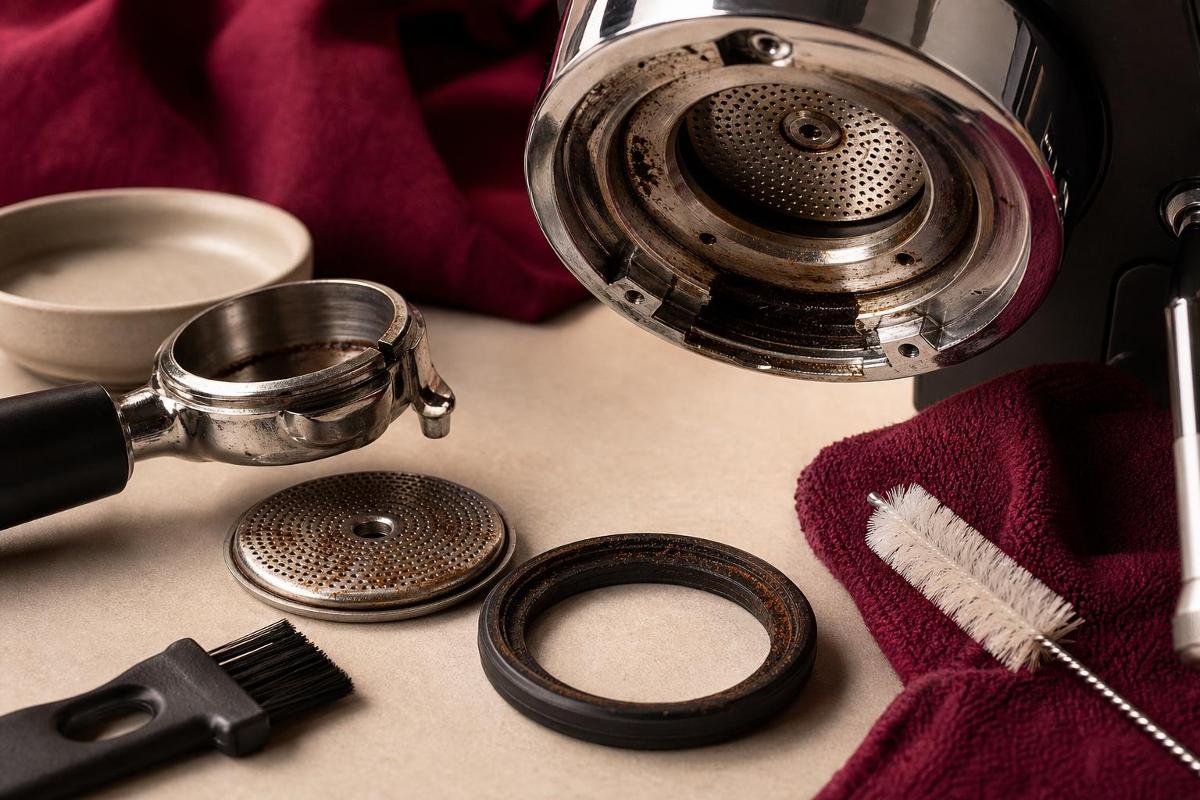
A clean group head helps your espresso machine work as intended and prevents coffee oils and grounds from building up around the brew area. This practical guide…
A clean group head helps your espresso machine work as intended and prevents coffee oils and grounds from building up around the brew area. This practical guide explains how to clean a home espresso machine group head, which tools to use and when backflushing is appropriate. Always check your machine’s manual before removing parts or using cleaning products.
Why the group head needs regular cleaning
The group head is the part of the espresso machine that delivers hot water through the coffee in your portafilter. It includes the area where the portafilter locks in, as well as the shower screen, which spreads water over the coffee puck.
Each shot can leave behind fine grounds and coffee oils. Over time, residue may collect around the shower screen and the group head’s gasket — the rubber or silicone seal that helps the portafilter fit snugly. A dirty brew area can affect water flow and may leave old coffee smells or flavours in the next shot.
Regular cleaning is also a useful way to spot wear or damage. For example, a torn gasket or a loose shower screen may become easier to notice when you inspect the area. Cleaning cannot guarantee a better-tasting espresso, but it helps keep the parts that come into contact with coffee free of avoidable residue.
Explore the related selection here: Coffee Machines.
What you need to clean an espresso machine group head
For basic espresso machine group head cleaning, gather:
- A group head brush, or another small, soft brush suitable for the machine
- A clean, lint-free cloth
- A bowl or cup for waste water
- Fresh water
- A blind basket and machine-approved cleaning product, if your manual permits backflushing
Choose tools with your machine in mind. A dedicated espresso machine group head brush is shaped to reach around the group head without placing your fingers near the hot outlet. Look for one that is sturdy but not abrasive. Avoid stiff metal brushes or anything that might scratch the shower screen or damage the gasket.
For a cloth, use one that will not shed fibres. A separate cloth for the group head is useful: a cloth used on the steam wand or worktop may carry milk or other residues into the brew area.
Do not assume that a product labelled for espresso machines is suitable for every model. Check the manual for approved cleaners and instructions on dosage. Some machines need no detergent for daily cleaning; others have specific procedures for periodic cleaning. Never mix cleaning products.
How to clean a home espresso machine group head step by step
Let the machine’s instructions guide you, especially if you are unsure whether a part is removable or whether the group head can be flushed. For a straightforward rinse and brush clean:
1. Prepare the machine. Remove the portafilter and switch the machine off if you will be cleaning around the group head by hand. Give hot parts time to cool enough to handle safely. If your manual recommends a brief water flush first, follow its directions and keep hands and cloths clear of the hot water.
2. Brush away loose grounds. Use the group head brush to sweep around the underside of the group head, including the area around the gasket and the edge of the shower screen. Brush gently rather than forcing the bristles into the seal.
3. Rinse the brew area. If your manual allows it, run a short flush of clean water through the group head to clear loosened particles. Do not leave the machine running unattended. Use a cup or bowl to catch the water, and take care with splashes.
4. Wipe the accessible surfaces. Once the parts are safe to touch, use a damp, lint-free cloth to remove any remaining residue around the group head. Avoid pushing cloth fibres into gaps.
5. Clean and dry the portafilter separately. Remove used coffee grounds and rinse the basket and portafilter. Dry them before putting them away or preparing another shot, unless your machine’s instructions say otherwise.
6. Check the result. Look for visible grounds or residue around the seal and screen. Refit the portafilter only when the group head and its parts are ready for use.
If residue does not come away with brushing and water, consult the manual before reaching for a cleaner or taking anything apart. Some components are designed to be removed by the user; others should be left in place or serviced by a technician.
Explore the related selection here: Ground coffee.
How to clean the shower screen and portafilter
The shower screen sits beneath the group head and spreads water over the coffee. Cleaning an espresso machine shower screen can be as simple as brushing and rinsing it, but removal is model-dependent. Do not unscrew it unless the manual explains how to do so and confirms that user removal is appropriate. Keep track of any screw or washer, and do not overtighten components when refitting them.
If the screen is removable, follow the manufacturer’s method for cleaning it. Use only approved products and tools, rinse it thoroughly, and check that it is correctly positioned before using the machine. If it looks damaged or will not sit securely, stop and seek advice rather than trying to force it into place.
For espresso machine portafilter cleaning, knock out the spent puck and rinse the basket and spouts after use. Coffee oils can collect in the basket and around the spouts, so give those areas a careful wipe. If the basket has stubborn residue, consult the manual about soaking it in an approved cleaner. Do not soak the portafilter handle unless the manufacturer says it is safe: some handles are made from materials that may be affected by heat or cleaning products.
Backflushing: when to do it and what to check first
Backflushing sends water, and sometimes a machine-approved cleaner, back through the group head to help clear internal coffee residue. It is not suitable for every espresso machine. It generally requires a three-way solenoid valve, which releases pressure from the group head when brewing stops, and a blind basket designed to block water flow. Do not assume your machine has the right system.
Before attempting espresso machine backflushing:
- Check the manual to confirm that backflushing is permitted.
- Follow the specified frequency, basket type and procedure.
- Use only the cleaning product and amount recommended for your model.
- Keep hands clear of the group head and follow the machine’s safety instructions.
If backflushing is not mentioned in the manual, or you cannot confirm whether your machine supports it, do not try it. A blocked basket can create pressure, so improvising with an unsuitable basket or procedure may damage equipment or create a safety risk. In that case, stick to the recommended cleaning routine and contact the manufacturer or a qualified technician if residue persists.
Explore the related selection here: Italian coffee.
Common group head cleaning mistakes to avoid
- Using the wrong cleaner: Household detergents, descalers and general-purpose cleaners are not interchangeable with espresso-machine cleaners. Use only products approved for the task.
- Scrubbing too hard: Abrasive tools or forceful brushing can damage the screen or gasket. Use gentle pressure and the right brush.
- Removing parts without checking: Screens, screws and seals vary between machines. Follow the manual before disassembly.
- Ignoring heat and pressure: The brew area and water can be hot. Follow the machine’s instructions and wait until components are safe to handle.
- Leaving cleaner behind: If an approved product is used, rinse as directed. Residue can remain if the cleaning cycle is cut short.
- Forgetting the portafilter: Grounds and oils collect in the basket and spouts as well as around the group head. Clean both parts of the brew area.
- Backflushing every machine: Backflushing is a specific procedure, not a universal cleaning step. Confirm that your machine supports it before proceeding.
How often should you clean your espresso machine?
A brief rinse and brush after making coffee is a useful starting point for an everyday espresso machine cleaning routine. Wipe away visible grounds, rinse the portafilter basket and flush the group head if the manual recommends it. These small steps take less effort than dealing with a heavy build-up later.
How often to carry out a deeper clean depends on the machine, how frequently you use it and the maker’s instructions. Some manuals specify a backflush schedule or a cleaning reminder; others do not recommend backflushing at all. Follow that guidance rather than applying a routine intended for a different model.
The group head is only one part of machine care. Clean the drip tray and water tank as directed, and maintain the steam wand separately if your machine has one. Descaling is also different from cleaning coffee oils: use the manufacturer’s instructions for both, and do not substitute one process for the other.
Signs your group head may need extra attention
A quick clean should remove ordinary loose grounds. If the area still appears dirty, or you notice any of the following, check the manual and consider whether the machine needs a deeper clean or professional attention:
- Water seems to come through the shower screen unevenly.
- Coffee grounds repeatedly collect around the gasket.
- The portafilter does not lock in as it usually does.
- You can see residue that brushing and a permitted rinse do not shift.
- The gasket looks cracked, misshapen or loose.
- The shower screen appears damaged or does not sit securely.
These signs do not identify a specific fault on their own. Avoid dismantling the group head to diagnose a problem unless the manual explains the process. If cleaning does not resolve a change in fit or water flow, contact the manufacturer or a repair professional.
A simple routine for cleaner coffee equipment
After each session, knock out the puck, rinse the basket and portafilter, and wipe away visible grounds around the group head. Brush the accessible area gently, then follow your manual’s guidance on flushing water through the machine. Once the components are cool and safe to handle, wipe them with a clean, lint-free cloth.
At the intervals specified by the manufacturer, carry out any deeper cleaning or backflushing the manual recommends. Keep the right brush and approved cleaner nearby, and avoid removing parts or using products unless the instructions allow it.
A few consistent habits make group head care straightforward. Start with the steps your machine supports, then refer to its manual whenever you are unsure.
Sources
- Cleaning the Group Head — Breville BES995 Instruction Booklet
- How to Perform a Clear Water Backflush — Breville
- Cleaning & Maintenance — Breville
Explore the related selection here: How to Adjust Coffee Strength on a Bean-to-Cup Machine.