
Blog
How to Adjust Coffee Strength on a Bean-to-Cup Machine
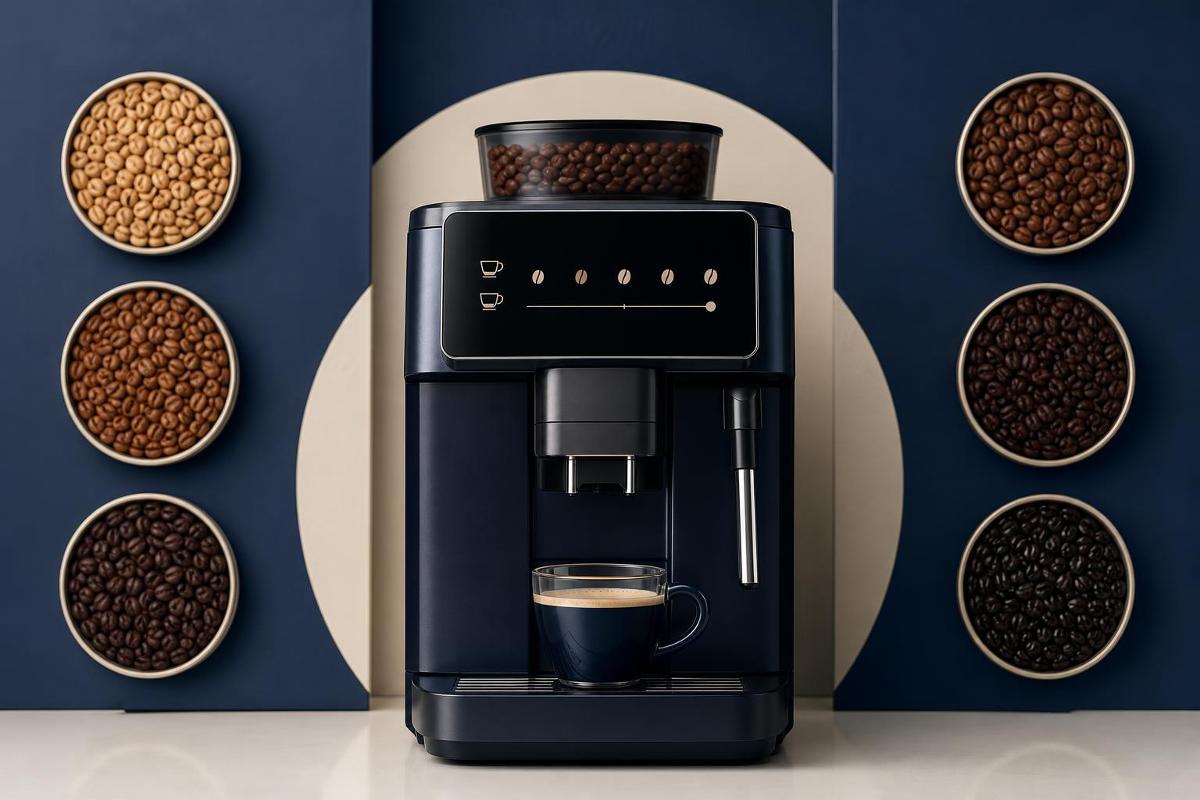
Learn how strength, dose, grind and drink volume affect coffee from a bean-to-cup machine, with simple steps for adjusting settings and improving flavour.
A bean-to-cup machine can make anything from a short espresso to a longer, milder drink. Its strength control is not always self-explanatory: it often changes how much coffee is ground, while drink size, grind and beans also affect the result. Use the steps below to find a flavour you enjoy, changing one setting at a time.
What the strength setting actually changes
On many bean-to-cup machines, the strength setting controls the dose: the amount of ground coffee used for a drink. A higher setting generally means more coffee is ground; a lower setting uses less. Controls may appear as mild-to-strong levels, bean symbols or numbered aroma settings.
Strength and drink size are different controls. A larger cup may contain more water but not more coffee, so it can taste less concentrated even when the strength setting is unchanged. A stronger setting does not necessarily make a smaller drink. Depending on the model, you may be able to adjust the dose, water volume or both, while other machines use preset recipes. Check the manual to confirm what each control changes.
Strength is also not the same as bitterness. A coffee can taste intense without being harsh, while bitterness may relate to the grind, extraction, recipe or beans. The strength setting affects one part of the cup; it does not guarantee a particular flavour.
How to adjust coffee strength step by step
Keep the drink, beans and cup size the same while you test settings. This makes it easier to identify what changed.
1. Choose a familiar drink. Start with the espresso, coffee or other recipe you make most often, using the same cup each time.
2. Note your current settings. Record the strength level and drink volume, if adjustable. A short note on your phone is enough.
3. Taste a coffee made with those settings. Decide whether it seems too mild, too intense, bitter or simply less concentrated than you prefer.
4. Change the strength by one step. Make the same drink again without changing the beans, grind or volume. Many machines will use a different amount of ground coffee at the new setting.
5. Compare the cups. Consider aroma, flavour and finish, not just colour. If the result is better, try another small adjustment if your machine allows it.
6. Save or record your preference. Programme a personal drink if your machine supports it. Otherwise, keep a note so you can repeat the recipe.
Change one variable at a time wherever possible. If you adjust strength, grind and volume together, it is difficult to tell which change helped. After changing the grinder, allow the machine to use some coffee already in the grinder before judging the full effect.
Dose, grind size and drink volume
The strength setting is only one of several useful coffee machine settings. Dose, water volume and grind all influence the balance of a cup, but they do not produce identical results.
- Coffee dose: If your machine allows a direct dose adjustment, more coffee can make a drink taste fuller and more concentrated. Use the available settings; do not try to add extra grounds manually, and respect the machine’s limits.
- Drink volume: Less water with a similar dose usually gives a more concentrated drink. If a cup tastes weak, try reducing its programmed volume before assuming you need different beans.
- Grind size: A finer grind can slow water flow through the coffee, while a coarser grind can let it pass more quickly. Grind changes affect extraction as well as perceived intensity, so they are not a simple substitute for the strength control.
Make small grinder adjustments and follow the manufacturer’s instructions. Some machines require the grinder to be adjusted only while it is operating. Avoid changing several steps at once: a large adjustment makes the result harder to assess, and its effect may not show fully until coffee already in the grinder has been used.
For a larger but more intense drink, you might increase the dose, reduce the water volume or choose a recipe designed for a longer coffee. These options are not interchangeable. Espresso and longer coffee recipes use water differently, so their flavours may differ even if they seem similarly strong.
Fine-tune settings by taste
Use flavour as your guide rather than aiming for the highest strength level. The right setting is the one that suits your preference, whether you enjoy a short espresso or a larger cup.
- Too mild or watery: Try a higher strength setting or a smaller drink volume. If neither helps, consider whether the beans suit your taste and whether the machine needs cleaning.
- Too intense but not bitter: Reduce the dose or select a slightly larger volume. You may prefer a lower strength setting with the same beans.
- Bitter, dry or harsh: Lowering the strength may help, but also consider whether the grind is too fine or the recipe does not suit the beans. Change one setting and taste again.
- Sour or sharp: The coffee may not be extracting as you would like. A small grind or recipe adjustment may help, though results vary by machine and beans.
Keep a simple tasting note with the drink, strength, volume and what you might change next time. This helps you return to a successful setting and compare new adjustments. If others use the machine, saved recipes or notes can make preferred drinks easier to repeat.
Why coffee can taste weak, bitter or inconsistent
A weak cup does not always call for a higher strength setting. Too much water for the dose, a lighter-tasting coffee style or old coffee residue can all affect flavour. First check that the selected recipe and cup size match the drink you want.
Bitterness can have several causes, including a grind that is too fine for the recipe, an unsuitable dose or beans whose flavour profile is not to your liking. Raising the strength may make the bitterness more noticeable rather than fix it. Return to a familiar setting and adjust one variable at a time.
Inconsistency may follow a change of beans, a different drink programme or a grinder adjustment whose effect has not yet fully appeared. The machine’s condition matters too: coffee oils and leftover grounds can affect flavour, and neglected maintenance can interfere with reliable operation. Follow the cleaning and descaling guidance for your model. See the available Coffee beans selection when comparing options.
Choosing beans for your preferred coffee strength
Choose beans for the flavour you enjoy, not only for a label suggesting strength. Packaging information about roast and intended use can be a useful starting point, but it cannot guarantee a particular result. If possible, try a small quantity before committing to a large bag.
- For a fuller, bolder-tasting cup: Consider beans described as dark-roasted or suited to espresso, then test them at a moderate strength setting. Roast description is a guide, not a promise of flavour.
- For more noticeable flavour differences: Medium or lighter roasts may make particular notes easier to notice in a short drink. The machine’s recipe and settings still affect the cup.
- For Italian-style coffee: Italian coffee beans and espresso blends may suit people who enjoy a traditional espresso-style profile. Blends and roasts vary, so check the tasting notes rather than relying on the name alone.
- For everyday use: Follow the machine maker’s guidance on suitable beans. Very oily beans can leave more residue in some grinders, so consider the cleaning requirements of your machine.
Store beans in a cool, dry place in a well-sealed container, away from heat and direct light. When comparing beans, keep the recipe and machine settings constant. Find a setting you like with one coffee first, then test another using the same recipe.
Keeping your machine clean for consistent results
Cleaning cannot make every cup identical, but it helps the machine work as intended and keeps residue from becoming an avoidable source of off-flavours. Routines differ, so follow the instructions for your specific model.
Empty and rinse the drip tray and used-grounds container as recommended, and clean removable parts that contact coffee. If the brew group can be removed, follow its care instructions. Run the machine’s cleaning programme and descale at the intervals specified by the manufacturer. Keep the hopper and grinder area clear of old grounds where the manual permits, and do not put water or cleaning products into parts not designed for them.
If flavour remains inconsistent after cleaning, check the drink volume, strength and grinder setting before making further changes.
Frequently asked questions
How do I make coffee stronger on a bean-to-cup machine?
Raise the strength setting by one step, then make the same drink at the same volume and taste it. If it still seems weak, try reducing the water volume or checking the dose and grinder settings. Make one change at a time so you can tell what helped.
Does a higher strength setting mean more caffeine?
Not necessarily in a predictable way. A higher setting may use more ground coffee, but caffeine in the finished drink depends on factors such as the beans, recipe and serving size. Use the strength control to adjust flavour, not as a precise caffeine measure.
Should I use a finer grind for stronger coffee?
Not automatically. A finer grind changes how water passes through the coffee and affects extraction. The result may taste more intense, bitter or harsh rather than simply stronger. Start with the strength or volume controls, and adjust the grinder gradually only if needed.
Why does a large coffee taste weaker than an espresso?
A larger drink usually contains more water. If the coffee dose stays similar, it can taste less concentrated than a short espresso. Try a smaller volume or a recipe with a higher dose, if your machine offers that option.
Do all bean-to-cup machines use the same strength settings?
No. Controls, labels and results vary by model. One machine may use bean symbols, another numbered levels, and some allow separate dose and volume adjustments. The instruction manual is the best guide to what each control changes.
The simplest approach is to keep the beans and recipe constant, then adjust one setting at a time. Start with strength, consider drink volume next and fine-tune the grind only if needed. A few tasting notes can help you repeat a cup you enjoy.
Sources
- De’Longhi ECAM292.52.GB Instruction Manual
- Philips espresso machine setup guide
- Coffee Decoded: The Science of “Dialing-In” — Specialty Coffee Association
Explore the related selection here: How to Clean a Coffee Capsule Machine at Home: A Practical Guide.