
Blog
ESE Pod Size: Check Machine Compatibility First
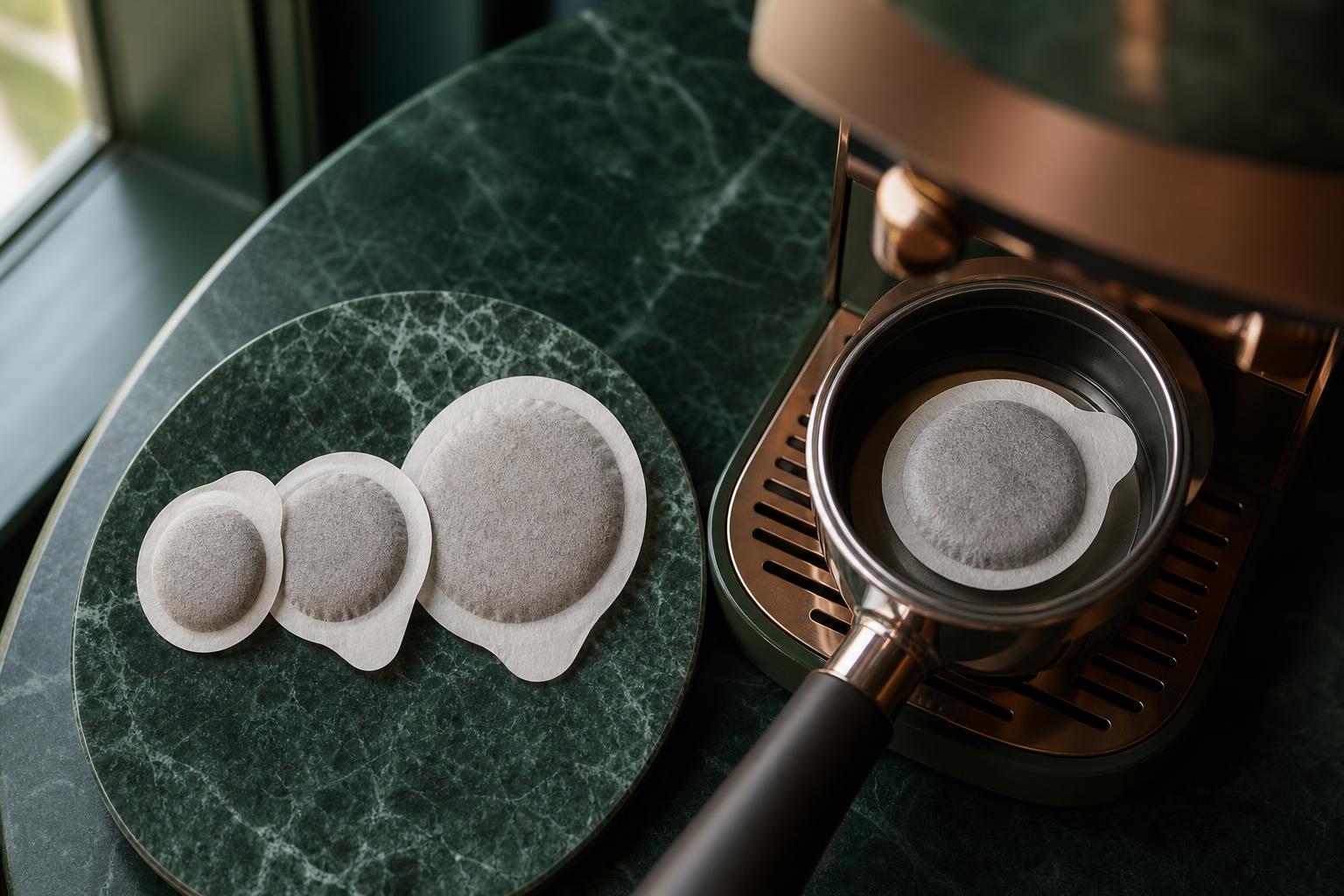
Learn how 44 mm ESE pods fit espresso machines, which holders and baskets you need, and how to avoid compatibility mistakes before buying.
Choosing the right coffee pod is only part of the process. Your espresso machine must also be designed to accept it. ESE pods can simplify preparation of a consistent single espresso, but the description “44 mm” does not guarantee that every pod fits every machine. Before buying Italian coffee pods, check the machine manual, filter basket and manufacturer’s compatibility guidance.
ESE pods explained: what they are and how the standard works
ESE stands for Easy Serving Espresso. An ESE pod is a pre-portioned serving of ground coffee sealed between two round layers of filter paper. It is placed in a compatible espresso machine, where hot water passes through the coffee to produce an espresso-style drink.
Unlike plastic or aluminium coffee capsules, ESE pods are paper espresso pods rather than rigid containers. Because the coffee is already portioned, you generally do not need to weigh, grind or tamp loose coffee for each serving. This can make preparation quicker and reduce the equipment needed beside the machine.
The format is widely used, particularly in European coffee products and Italian blends, but compatibility depends on the machine. Some traditional pump espresso machines accept ESE pods with a dedicated basket, while others are designed only for loose ground coffee. Capsule machines use a different brewing system. The terms “pod”, “capsule” and “single-dose coffee” are sometimes used loosely, so they should not be treated as interchangeable.
Explore the related selection here: Caffè Borbone Miscela Nera: Flavour and Compatibility.
What size are ESE coffee pods?
The commonly recognised ESE size is 44 mm in diameter. This normally refers to the approximate width of the round paper pod. ESE pods are generally intended for one espresso portion, although their dose and thickness can vary between products.
It is safer to regard 44 mm as a standard reference size rather than a promise of universal compatibility. The holder must support the pod and position it correctly beneath the shower screen. Thickness, paper edge, coffee dose and compression can all affect the fit. Without the correct basket or pod insert, a pod may not brew properly even when its listed diameter appears suitable.
Why the 44 mm measurement can be confusing
Online listings do not always measure products in the same way. One seller may give the approximate pod diameter, while another describes a basket opening or paper rim. Small differences do not necessarily indicate different coffee systems, but unclear specifications deserve caution.
Some products are larger soft pods, while others are capsules made for a named machine system. A capsule can look round but still be unsuitable for an ESE holder. Shape and thickness matter because the holder must support the paper pod evenly beneath the shower screen. If a pod is too wide, too thick or poorly supported, water may flow around the coffee instead of through it, resulting in uneven extraction.
Look for wording such as 44 mm ESE pods, Easy Serving Espresso pods or suitable for ESE-compatible machines. Treat vague phrases such as “universal coffee pods” carefully. Related machines are available in the ESE Pod Coffee Machines (44 mm) selection.
How to check whether your espresso machine is compatible
Start with the machine manual. Search for terms such as “ESE”, “Easy Serving Espresso”, “paper pods” or “pod filter”. The manufacturer’s instructions should take priority over a general online description or a retailer’s broad compatibility claim.
Next, inspect the supplied filter baskets. Some machines include a basket specifically marked for pods, while others provide only single and double baskets for loose ground coffee. A standard ground-coffee basket is not automatically an ESE basket.
If you no longer have the manual, use the exact model number to find the manufacturer’s product documentation or support information. Do not rely on appearance alone: two similar-looking machines can use different brewing systems. If the information remains unclear, contact the manufacturer or a knowledgeable retailer before buying a large quantity.
Check these points:
- Is there a dedicated pod basket or pod insert?
- Does the packaging or manual mention ESE compatibility?
- Is the basket designed to hold a round paper pod securely?
- Does the manufacturer specify a particular holder or adapter?
- Are paper pods excluded from the machine’s instructions?
This check can prevent an unsuitable coffee purchase and show whether an accessory is required.
ESE pod holders, filter baskets and adapters
An ESE pod holder positions the paper pod inside the machine. It may be a separate filter basket, an insert placed in the group handle or part of a dedicated pod system.
A suitable holder should support the pod without folding it excessively and position it correctly beneath the shower screen. It must also match the machine’s group handle or brewing unit. A holder that fits one model or basket size may not fit another.
Adapters need particular care. An adapter described simply as “for pods” may be intended for a capsule system rather than 44 mm ESE pods. Before ordering, check the exact machine model, holder dimensions and manufacturer’s compatibility statement. If the machine does not include a compatible basket, choose only an accessory specifically identified for that model.
Never force a pod into a basket that is too small or leave it loose in a basket that is too large. Either situation can cause poor extraction and make cleaning more difficult.
Are all ESE pods the same size?
Most products sold as ESE pods follow the familiar 44 mm format, but they are not identical in every detail. Roasters may vary the dose, grind, paper, thickness and compression.
A thicker pod may sit differently beneath the shower screen than a thinner one. The amount of coffee can also affect how easily the group handle locks into place. If the handle becomes unusually difficult to close, stop rather than applying extra force.
Keep the paper edge intact. Torn or badly flattened pods may not seal properly, allowing water to escape around the coffee. Store pods in their original packaging and handle them gently. Some products may be described as soft pods or paper pods without being standard ESE pods, so read the technical description instead of assuming that every paper-wrapped portion has the same dimensions.
ESE pods versus coffee capsules
ESE pods
- Made from paper and ground coffee.
- Usually associated with the 44 mm Easy Serving Espresso format.
- Used in a compatible espresso basket or holder.
- May be suitable for local paper or organic-waste processing, depending on local facilities and rules; check local guidance.
- Often available in traditional Italian blends and different roast styles.
Coffee capsules
- Usually rigid containers made from plastic, aluminium or a combination of materials.
- Designed for a particular capsule system or machine family.
- Sealed in a way that forms part of the machine’s brewing process.
- Not interchangeable with ESE pods simply because both are single servings.
A capsule machine normally cannot accept an ESE pod, and an ESE-compatible machine may not accept capsules. Identify the brewing format before buying coffee or accessories.
How to choose ESE pods after compatibility is confirmed
Once machine fit is confirmed, choose coffee according to taste and intended use. Italian blends often combine different origins to create a particular balance of sweetness, body and bitterness. Single-origin options may offer a more distinctive flavour profile. Product descriptions can guide you, but personal preference remains the most useful factor.
Consider roast level and the drinks you usually prepare. A darker roast may suit someone who prefers a bold, intense espresso, while a lighter or medium roast may highlight more aromatic or fruity notes. If you normally add milk, a fuller-bodied blend may remain more noticeable in the finished drink.
Freshness also matters for ground coffee. Check the best-before date and, where provided, roasting or packing information. Individually sealed pods protect each portion until it is opened, but they should still be stored in a cool, dry place away from strong aromas.
Your choice can also depend on serving habits. Look for decaffeinated, organic or particular Italian blends if those are priorities. When trying a new roast, buy a small selection first so you can confirm both flavour and machine fit before choosing a larger pack.
How to use an ESE pod correctly
Begin with a clean, ready-to-brew machine. Insert the correct ESE filter basket or pod holder into the group handle. Remove one pod from its packaging and place it flat in the holder, following the machine manual.
Do not add loose coffee on top of the pod, and do not tamp it unless the manufacturer specifically instructs you to do so. The pod is already prepared for the intended brewing system.
Lock the group handle into place without forcing it. Start the extraction and stop it according to the machine’s instructions or your preferred espresso volume. Remove the used pod carefully and dispose of it according to local waste guidance.
If the flow is unusually fast, slow or uneven, first check the pod position, basket cleanliness and machine instructions. Correct placement and a clean holder are sensible first checks before changing coffee or equipment.
ESE pod size and compatibility FAQs
Are all 44 mm pods compatible with every ESE machine?
No. The 44 mm description refers to the common pod diameter, but holders, basket shapes and machine designs vary. Confirm compatibility with the manufacturer.
Can I use ESE pods in a standard espresso machine?
Only if the machine accepts ESE pods and has the correct basket or holder. A machine designed solely for loose ground coffee may not be suitable.
Are ESE pods the same as coffee capsules?
No. ESE pods are paper-wrapped portions of ground coffee. Capsules are rigid containers made for specific brewing systems.
Do I need an adapter?
Possibly. Use one only when it is specified for your exact model and for 44 mm ESE pods.
Can I use a pod in a double coffee basket?
Follow the machine instructions. A basket designed for two doses may not hold one ESE pod in the correct position.
Why does my group handle not close?
The pod may be incorrectly positioned, too thick or placed in the wrong basket. Do not force the handle.
Final checklist
Before buying, confirm that:
- The manual or manufacturer states that your machine accepts ESE pods.
- The required format is Easy Serving Espresso, commonly described as 44 mm.
- You have the correct ESE pod holder or filter basket.
- Any adapter is listed for your exact machine model.
- The product is a paper ESE pod, not a capsule or different soft-pod format.
- The pod dimensions and product instructions are clear.
- The flavour profile, roast and freshness information suit your preferences.
With these checks complete, choosing Italian coffee pods becomes simpler. Confirm the hardware first, then explore blends and roast styles with confidence.