
Blog
How to Choose the Best Moka Pot Size for One
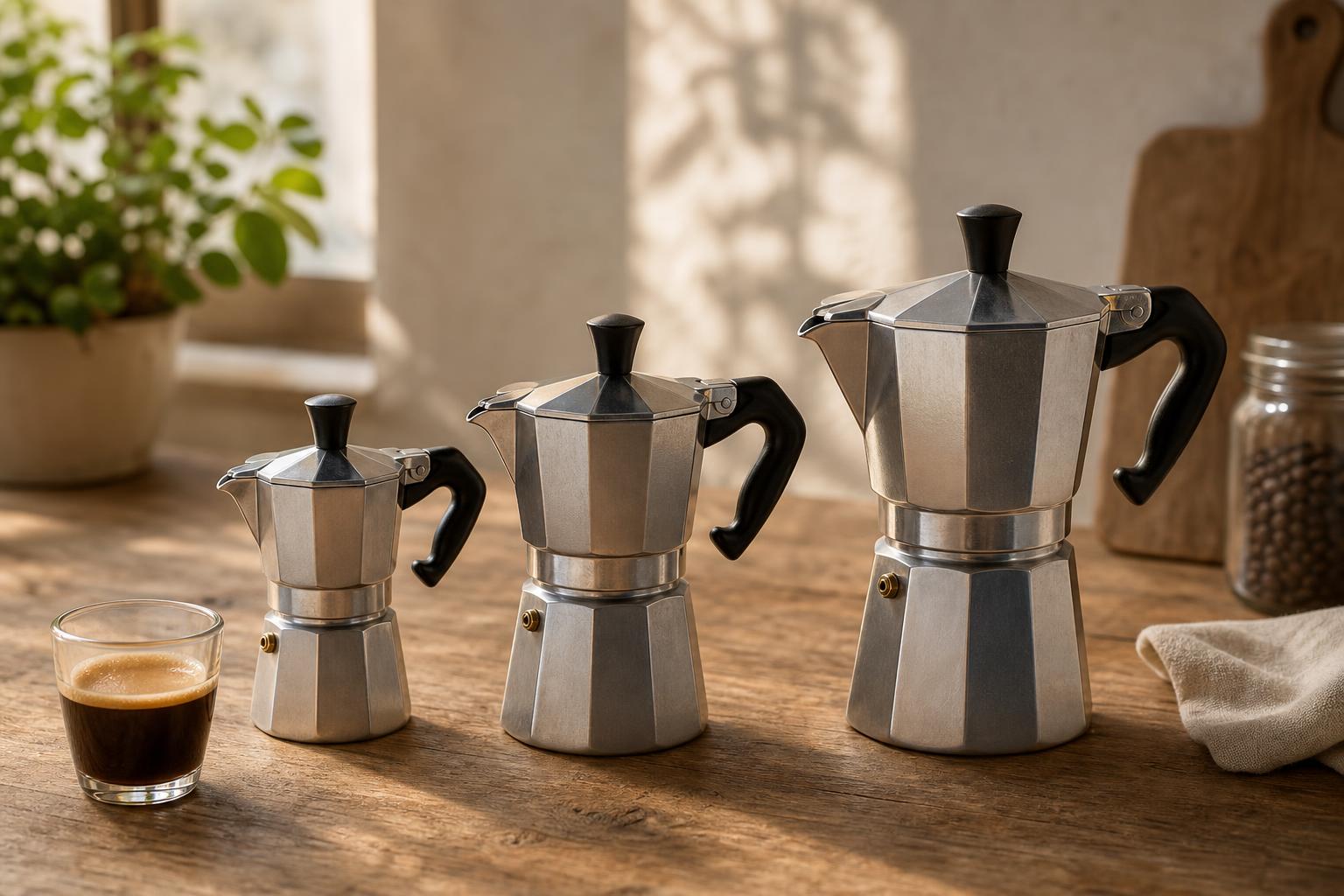
Learn which moka pot size suits one person, from 1-cup to 3-cup models, with practical advice on capacity, coffee style, hob compatibility and brewing.
A moka pot is a simple way to make rich, concentrated coffee at home, but choosing the wrong size can lead to wasted coffee or an unsatisfying brew. For one person, the best option depends on how much you usually drink, whether you prefer a short coffee or a longer milk- or water-based drink, and which hob you use.
This guide explains moka pot capacities, traditional serving sizes and the practical differences between 1-cup, 2-cup and 3-cup Italian coffee makers.
What Does a “Cup” Mean in Moka Pot Sizes?
Moka pot cup sizes do not refer to a standard mug or a full 240–300 ml cup. They describe small, traditional Italian coffee servings.
A moka pot cup is usually around 30–60 ml, depending on the manufacturer and model. Therefore, a pot labelled “3-cup” may produce approximately 130–180 ml of coffee, not three large mugs.
Typical capacities include:
- 1-cup moka pot: approximately 40–60 ml
- 2-cup moka pot: approximately 90–120 ml
- 3-cup moka pot: approximately 130–180 ml
- 6-cup moka pot: approximately 270–300 ml
These figures are only a guide. Always check the stated capacity in millilitres before buying, especially if you prefer a specific serving size.
Moka pot coffee is concentrated and may be served in a small cup, diluted with hot water or combined with hot milk. A 2-cup model, for example, may provide one generous drink rather than two servings for people accustomed to standard mugs.
Explore the related selection here: Stainless Steel vs Aluminium Moka Pots: Which to Choose?.
Explore the related selection here: Miscela Blu vs Light: Which Capsule Should You Choose?.
Which Moka Pot Size Is Best for One Person?
For most solo coffee drinkers, a 1-cup or 2-cup moka pot is the most practical choice.
Choose a 1-cup model if you usually drink one short, concentrated coffee and want to prepare only what you will consume. Choose a 2-cup model if you prefer a larger serving, want extra coffee for an Americano-style drink or occasionally share a small coffee.
A 3-cup model can suit someone who enjoys a longer coffee, adds plenty of milk or hot water, or wants enough brewed coffee for a larger drink without making multiple batches.
Choose according to the amount you normally brew, not only the size of your favourite mug. Moka pots are designed to be filled to their intended capacity, so a larger model should not simply be used as a smaller one.
1-Cup Moka Pot: Best for a Small Coffee
A 1-cup moka pot is designed for one small traditional serving and will usually brew around 40–60 ml, depending on the model.
This size works well if you:
- Drink one short coffee at a time
- Prefer concentrated flavour
- Have limited kitchen space
- Want to minimise leftover coffee
- Usually drink coffee without much added water or milk
It is a useful choice for an after-meal coffee or for someone who drinks coffee occasionally. However, it may feel too small if you prefer a standard mug. Adding water or milk makes the drink longer, but the amount of brewed coffee remains limited.
Check the manufacturer’s capacity rather than relying only on the “1-cup” label. Some small models produce closer to 30 ml, while others are nearer to 60 ml.
Explore the related selection here: Olive Products.
2-Cup Moka Pot: A Flexible Choice for One Person
For many people, the 2-cup moka pot is the best size for one person. It typically produces around 90–120 ml, although capacity varies between manufacturers.
You can drink this amount as one larger, strong serving, divide it between two small cups or use it as the base for a longer coffee. It is particularly useful if you:
- Prefer an Americano-style drink
- Add warm or steamed milk
- Want a generous solo serving
- Occasionally prepare coffee for two people
- Find a 1-cup model too small but do not need a 3-cup pot
The main limitation is that it may produce more coffee than you need for a very short serving. Because moka pots should generally be used at their designed capacity, any excess may need to be saved or used in another drink.
When to Choose a 3-Cup Moka Pot
A 3-cup moka pot generally brews around 130–180 ml. It can work well for one person who likes a larger breakfast coffee or a drink with milk or hot water.
Consider this size if you:
- Prefer a large coffee
- Add milk or hot water
- Want a fuller base for a latte-style drink
- Use a larger cup
- Occasionally serve two small coffees
A 3-cup pot is not necessarily too large for one person. It depends on your routine. However, if you usually drink a short, concentrated coffee, a 1-cup or 2-cup model is likely to create less waste and be more convenient.
Explore the related selection here: Special Categories.
Explore the related selection here: How to Use an Italian Moka Pot: Easy Steps.
Match the Moka Pot to Your Coffee Style
Your preferred drink matters as much as the number of people you are serving.
For a short black coffee, a 1-cup model may be enough. For a longer black coffee, a 2-cup model provides more brewed coffee to dilute with hot water while retaining noticeable flavour. If you prepare coffee with milk, consider the final drink size: a 1-cup pot makes a small milk coffee, while a 2-cup or 3-cup model gives you a fuller base.
Do not try to make a weaker coffee by using less coffee in the filter. Brew the appropriate amount for the pot, then adjust the finished drink with hot water or milk.
As a general guide:
- Short and concentrated: 1-cup
- Moderate solo serving: 2-cup
- Large coffee with water or milk: 3-cup
- Two small traditional coffees: 2-cup or 3-cup, depending on capacity
Moka Pot Size Comparison
Use this comparison as a buying guide, but confirm the exact capacity for the model you are considering.
1-cup moka pot
- Typical capacity: around 40–60 ml
- Usual use: one short coffee
- Best for: concentrated solo servings
- Main advantage: minimal waste and a compact footprint
2-cup moka pot
- Typical capacity: around 90–120 ml
- Usual use: one generous coffee or two small coffees
- Best for: flexible everyday use
- Main advantage: suitable for short, longer or milk-based drinks
3-cup moka pot
- Typical capacity: around 130–180 ml
- Usual use: one large coffee or two small servings
- Best for: longer drinks and occasional sharing
- Main advantage: more volume without choosing a much larger pot
When comparing Bialetti moka pot sizes or other Italian coffee makers, millilitres provide the clearest comparison because cup labels are not completely standard.
Why You Should Not Fill a Moka Pot Partway
A moka pot is designed to work with a specific relationship between water, ground coffee and pressure. The lower chamber should normally be filled to the recommended level, and the filter basket should contain the appropriate amount of coffee for that model.
Using a larger pot with less water and coffee may affect brewing, extraction and final strength. For this reason, select a model close to your normal serving size rather than buying a 6-cup pot and using it partially.
You can dilute correctly brewed coffee with hot water or add milk, but a larger moka pot may not perform properly when only partly filled.
Check Hob Compatibility Before Buying
Not every moka pot works on every hob. Traditional aluminium models are commonly made for gas, electric and ceramic hobs, but aluminium is not compatible with most induction hobs unless the pot has a suitable magnetic base.
Before buying, check:
- Whether the pot suits gas, ceramic or electric hobs
- Whether it is specifically compatible with induction
- The minimum hob ring or heating-zone size
- The manufacturer’s instructions
If you use induction, choose an induction-compatible model or use an adapter only when permitted by the manufacturer. Compatibility and safe use should come before appearance.
Coffee Grind, Water and Brewing Tips
Use coffee ground specifically for moka pots, or a grind finer than filter coffee but coarser than traditional espresso powder. Grounds that are too fine can restrict water flow, while grounds that are too coarse may produce a weak result.
For a reliable brew:
1. Fill the lower chamber with fresh water to just below the safety valve, unless the manufacturer gives different instructions.
2. Fill the filter basket without compressing the coffee.
3. Remove loose grounds from the rim and thread.
4. Assemble the pot securely.
5. Heat it over a moderate setting.
6. Remove it from the hob when the coffee has mostly flowed through and the sound changes.
7. Stir the coffee in the upper chamber before serving.
Do not tamp the grounds as you would for an espresso machine. Light, medium and darker roasts can all work when ground appropriately.
Common Moka Pot Size Mistakes
Choosing by mug size alone: A 3-cup pot does not usually fill three standard mugs. Check the capacity in millilitres.
Buying the largest model: A larger pot is not more flexible if you usually need one small serving.
Ignoring the hob: Traditional aluminium models may not work on induction.
Assuming all brands measure cups identically: Compare the actual capacity and filter size.
Planning to brew half a pot: Select a smaller model instead.
Using espresso-fine coffee: Very fine grounds can impede water flow.
Overheating: Excessive heat may produce harsh-tasting coffee. Moderate heat gives you better control.
Neglecting cleaning: After the pot cools, rinse it with warm water, remove coffee residue and let all parts dry fully. Avoid abrasive cleaners unless the manufacturer recommends them.
For a solo coffee drinker, the best Italian coffee maker size is usually the one that matches the amount you drink every day. Choose a 1-cup moka pot for a short coffee, a 2-cup model for flexibility or a 3-cup pot for a larger drink with milk or hot water.
Before purchasing from negoziodigiuditta.eu, compare the capacity in millilitres, check hob compatibility and select coffee suitable for moka pot brewing.