
Blog
Stainless Steel vs Aluminium Moka Pots: Key Differences
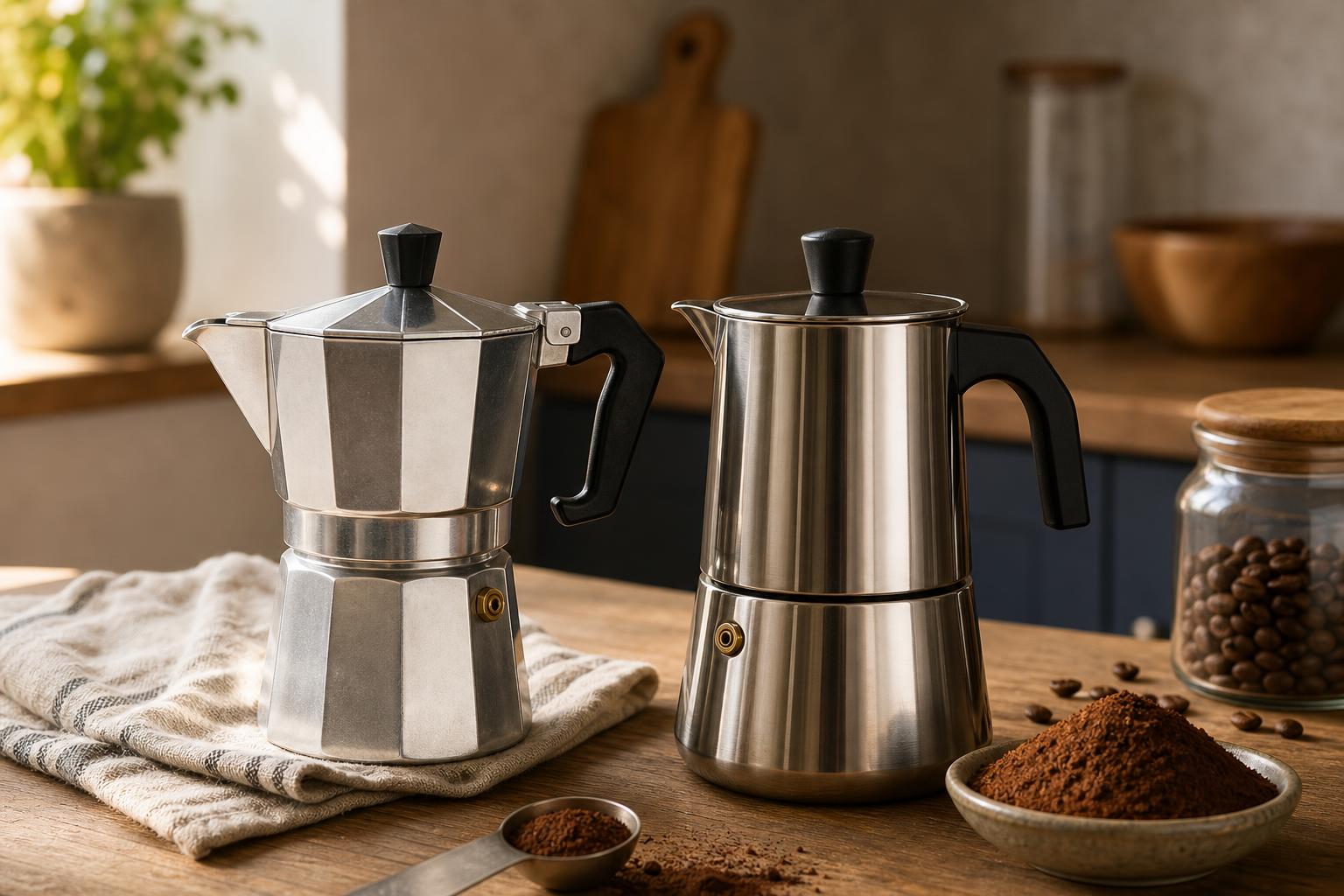
Compare stainless steel and aluminium moka pots by hob compatibility, heat-up time, cleaning and durability to find the right option for your kitchen and brewing habits.
Choosing between a stainless steel and aluminium moka pot depends on your hob, brewing habits, maintenance preferences and kitchen style. Both materials can make rich, aromatic coffee when you use fresh coffee, suitable water and controlled heat. Their everyday advantages are different, however.
Stainless Steel or Aluminium Moka Pot: Which Is Right for Your Kitchen?
The moka pot has been part of Italian coffee culture for generations. Its simple design uses pressure from heated water to pass through ground coffee, producing a concentrated drink between filter coffee and espresso in strength and texture.
Aluminium is the traditional material used in many classic octagonal moka pots. It is lightweight and heats quickly. Stainless steel is heavier, durable and often the more practical choice for modern kitchens, particularly those with induction hobs.
There is no universally better option. Consider your cooker, the number of people you serve, how often you brew and how much cleaning and maintenance you prefer.
Explore the related selection here: Coffee beans.
Explore the related selection here: How to Use an Italian Moka Pot: Easy Steps.
Explore the related selection here: How to Choose the Best Moka Pot Size for One.
Explore the related selection here: Miscela Blu vs Light: Which Capsule Should You Choose?.
Explore the related selection here: Moka Pot vs Espresso Machine: Which Is Right for You?.
Quick Comparison: Stainless Steel vs Aluminium Moka Pots
Aluminium moka pots
- Lightweight and easy to handle
- Traditional material for many Italian moka pots
- Heats quickly and is often available in classic designs
- Commonly suitable for gas, electric and some ceramic hobs
- Not normally compatible with induction without a magnetic base or adapter
- Needs careful hand washing and drying
- May darken or show marks over time
Stainless steel moka pots
- Strong, durable and resistant to everyday wear
- Often suitable for gas, electric, ceramic and induction hobs, depending on the model
- Easier to clean thoroughly
- Less likely to retain odours or coffee residue
- Usually heavier than aluminium
- May heat more gradually
- Available in traditional and contemporary styles
Both materials can brew enjoyable coffee. Build quality, the gasket, filter basket, safety valve, handle and base are also important.
How the Materials Differ
Aluminium is valued for its low weight and efficient heat conduction. It has long been used for moka pots because it heats readily and is easy to shape. It suits anyone who enjoys a lightweight, traditional coffee ritual.
The surface may become darker with use. This does not necessarily mean the pot is damaged, but abrasive cleaners and dishwashers can mark aluminium. Hand washing and thorough drying are usually preferable.
Stainless steel has a more modern feel. It is heavier and generally more resistant to staining, scratches and corrosion. A well-made model can remain attractive for years, although the gasket and filter will still need replacing when worn.
The body material is only one part of the construction. Check that the handle is comfortable, the lid opens safely and the base sits securely on your hob.
Brewing Performance and Coffee Flavour
The material affects how quickly the pot responds to heat, but it is rarely the main influence on flavour. Coffee quality, grind size, water and heat control usually matter more than the difference between aluminium and stainless steel.
Aluminium heats quickly and responds readily to temperature changes. Stainless steel may heat more gradually, depending on its thickness and base design. Models made for induction may have a layered or magnetic base that also affects heat distribution.
For consistent moka pot brewing:
- Use coffee ground for moka pots or a similar medium-fine grind, not an espresso-fine grind.
- Fill the lower chamber with water up to, but not above, the safety valve.
- Fill the basket loosely and level the coffee without pressing it down.
- Use moderate heat and remove the pot when the coffee begins to flow rapidly or splutter.
- Let the coffee settle briefly before serving.
Fresh beans or ground coffee can provide more aroma. Medium and medium-dark roasts are common choices, although lighter roasts can also work with careful preparation. Neither material automatically makes stronger or smoother coffee; consistent technique is more important.
Hob Compatibility
Gas hobs
Both materials are commonly suitable for gas hobs. Use a burner that matches the base and keep the flame below the edges. Flames extending around the sides can damage the handle or discolour the pot.
Electric and ceramic hobs
Most moka pots can be used on traditional electric hobs. On ceramic surfaces, check that the base sits flat and follow the manufacturer’s guidance. Lift the pot instead of sliding it to help protect the hob.
Induction hobs
A standard aluminium moka pot will not work directly on induction because aluminium is not magnetic. Choose a model specifically marked as induction-compatible, normally with a stainless steel or magnetic base.
An adapter plate can make a traditional aluminium pot usable, but it adds another item to handle and may heat less efficiently. For regular induction brewing, an induction-ready stainless steel model is usually simpler.
Explore the related selection here: How to Choose an Italian Coffee Gift Set.
Cleaning, Care and Durability
After each use, let the pot cool before unscrewing it. Remove the used coffee, separate the upper chamber, funnel and filter, then rinse the parts with warm water. Dry every component thoroughly before reassembling or storing the pot.
To maintain a moka pot:
- Do not leave used coffee in the filter basket.
- Check the filter plate, gasket and safety valve regularly.
- Avoid harsh scouring pads, especially on aluminium.
- Follow the manufacturer’s guidance about dishwasher use.
- Replace the gasket and filter when they become worn, loose or cracked.
Traditional aluminium pots are generally best washed by hand. Stainless steel is more forgiving, but hand washing can still protect its finish. Follow the manufacturer’s cleaning instructions rather than relying on residue build-up as a sign of authenticity.
Which Moka Pot Is Easier for Beginners?
Stainless steel can be the easier choice for beginners if it matches the household hob. It is durable, less prone to visible staining and often simple to clean. An induction-compatible model also avoids the need for an adapter.
Aluminium suits people using gas or conventional electric hobs who want a lightweight, traditional design. It is straightforward to operate but benefits from careful handling and drying.
Whatever the material, begin with moderate heat. Bitter or burnt coffee may result from excessive heat, a grind that is too fine or leaving the pot on the hob too long.
Choosing the Right Size
Moka pot sizes are described in cups, but these are small moka-style servings rather than large mugs. A one-cup model produces a small serving for one person, while a three-cup model may suit one generous coffee or two smaller servings.
- Choose one cup for a compact individual serving.
- Choose three cups for one or two smaller coffees.
- Choose six cups for several small servings or two larger drinks.
- Choose nine cups or more when you regularly serve a group.
The basket works best when filled to its intended level, so buying a large pot and filling it halfway is not usually ideal. Choose a size that matches your normal routine. The concentrated coffee can be served in small cups, diluted with hot water or combined with warm milk.
What to Look for in an Italian Moka Pot
Look beyond the material and consider the details that affect daily use:
- Clear information about the manufacturer and country of origin
- Clean threads, secure joints and a well-finished body
- A comfortable, heat-resistant handle and lid knob
- A clearly visible safety valve
- Replacement gaskets and filters that are easy to obtain
- A base designed for your hob
- Instructions covering assembly, use and cleaning
- Capacity suited to the number of coffees you prepare
A familiar octagonal shape may suggest a traditional aluminium design, but reliable product information and sound construction are more useful indicators. Confirm the material, capacity and hob compatibility before buying. Spare parts are also important because gaskets naturally wear with use.
Stainless Steel or Aluminium: Which Should You Choose?
Choose aluminium if you value a lightweight, traditional design and use a gas or conventional electric hob. It is a good option if you enjoy the classic ritual and are happy to wash and dry the parts carefully.
Choose stainless steel if durability, easier maintenance or induction compatibility matters most. It is especially practical for modern kitchens and frequent coffee drinkers.
If you are unsure, begin with your hob. For induction, select a stainless steel model specifically designed for that surface. For gas or electric cooking, both materials can work well, so focus on capacity, construction, replacement parts and handling.
The best moka pot is the one you will use confidently and maintain properly.
Frequently Asked Questions About Moka Pot Materials
Is stainless steel better than aluminium for a moka pot?
Not universally. Stainless steel is usually more durable and often suitable for induction, while aluminium is lightweight and traditional. The better option depends on your hob and preferences.
Can I use an aluminium moka pot on an induction hob?
A standard aluminium model will not work directly on induction. Choose an induction-compatible pot with a magnetic base or use a suitable adapter plate according to the instructions.
Does stainless steel make better-tasting coffee?
Not automatically. Beans, grind, water, heat and brewing technique have a greater effect on flavour. Both materials can produce enjoyable coffee when used correctly.
How do I clean a moka pot?
Let it cool, take it apart and rinse the chambers, funnel and filter with warm water. Remove coffee residue, check the valve and dry all parts thoroughly. Follow the manufacturer’s instructions, especially for aluminium models.
Can a moka pot go in the dishwasher?
Some stainless steel models may be dishwasher-compatible, but many traditional aluminium pots should be washed by hand. Check the product instructions first.
What coffee should I use in a moka pot?
Use fresh coffee ground for moka pots or a medium-fine grind. Do not compress it in the basket, and choose a roast level that suits your taste.
How long should a moka pot last?
A well-made moka pot can provide years of service when handled carefully. The gasket and filter may need replacing before the main body does.