
Blog
Moka Pot vs French Press: Which Coffee Maker Is Right for You?
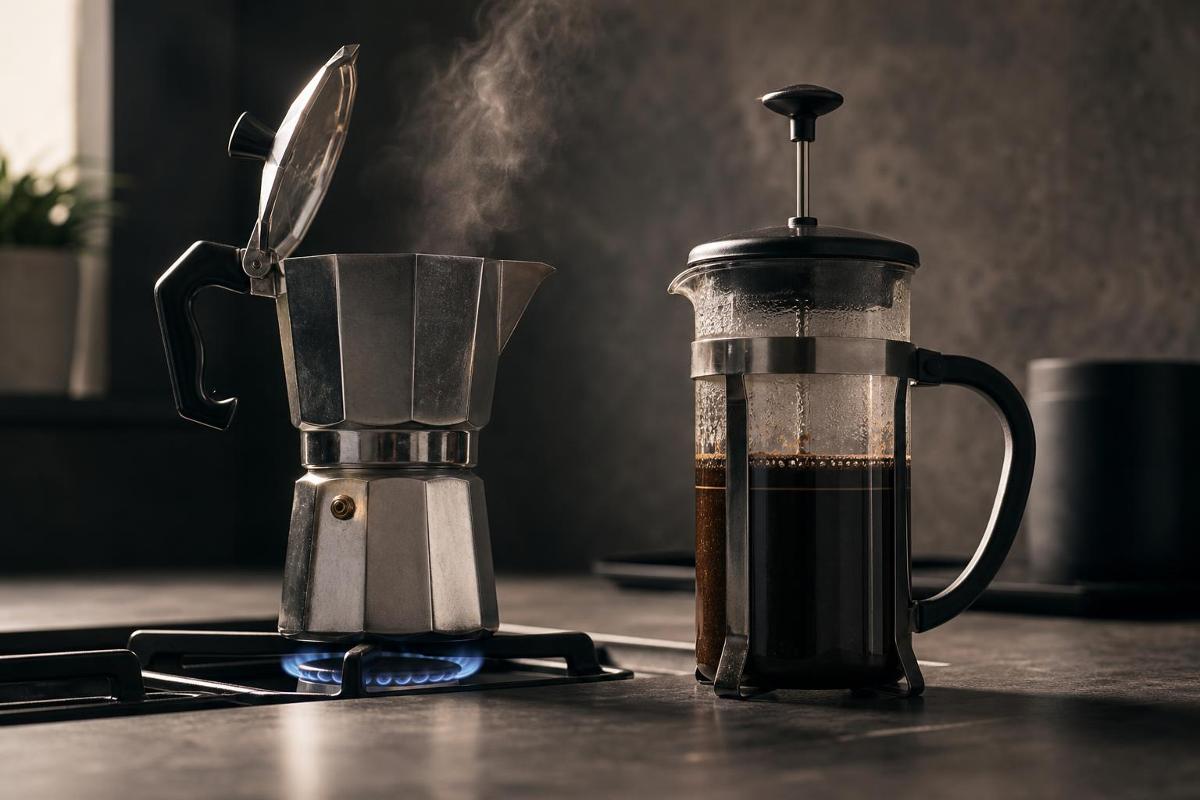
Choosing between a moka pot and a French press comes down to the coffee you enjoy and the routine you want. A moka pot makes a concentrated, full-bodied brew on the…
Choosing between a moka pot and a French press comes down to the coffee you enjoy and the routine you want. A moka pot makes a concentrated, full-bodied brew on the hob; a French press, also known as a cafetière, produces a fuller cup with a softer, more rounded character. Here’s how the two coffee makers compare, from grind size and cleaning to the practical details that can guide your purchase.
How moka pot and French press brewing work
A moka pot brews coffee on the hob using heated water and steam pressure. Water in the lower chamber heats up and passes through ground coffee in a filter basket, collecting in the upper chamber. The result is concentrated coffee, often served in small cups or diluted with hot water or milk. It is strong, but it is not espresso: a moka pot works at a different pressure and produces a different style of brew.
A French press uses immersion brewing. You add coarsely ground coffee to the carafe, pour in hot water and leave the coffee to steep. Pressing the plunger separates most of the grounds from the finished brew. Because the coffee and water stay in contact throughout the steep, you can make a larger batch in one go, then pour it into mugs.
Both methods are simple once you know the basics, but each responds to small changes in coffee, grind and technique. A moka pot’s heat and timing affect how evenly it brews; a French press’s steeping time and plunger technique influence the cup. Neither method guarantees a better result than the other: the best fit depends on the flavour and convenience you prefer.
Explore the related selection here: Coffee beans.
Moka pot vs French press: taste, strength and texture
Moka pot coffee is concentrated and often bold, with a pronounced coffee flavour. It can work well on its own in a small serving or as the base for a longer drink with hot water or milk. The brewing method encourages a dense, intense cup, though the result can taste bitter or harsh if the pot is overheated or the grind is too fine.
French press coffee is usually less concentrated, but it can feel substantial in the cup. Its metal filter lets more of the coffee’s oils and fine particles pass through than many paper-filter methods. That gives the brew a rounded texture, though it may leave some sediment at the bottom of the mug. If you prefer a cleaner finish, pour carefully and avoid disturbing the grounds.
Think about how you usually drink coffee:
- Choose a moka pot if you favour concentrated coffee, smaller servings or drinks made with milk.
- Choose a French press if you like a longer mug, a fuller mouthfeel and the option to brew several cups at once.
- Consider both if you enjoy changing your coffee style or regularly serve people with different preferences.
Strength is not only a matter of taste. The amount of coffee, water and brewed coffee in your cup also matters. A small serving of moka pot coffee may taste more intense than a mug of French press coffee, even if you use the same beans.
What coffee grind and beans work best for each method?
Grind size is one of the most important differences between the two coffee brewing methods.
For a moka pot, start with a medium-fine grind—finer than you would use for a French press, but not as fine as espresso. Very fine coffee can make it harder for water to pass through the basket and may contribute to an uneven or bitter brew. Fill the basket loosely and level the coffee rather than pressing it down.
For a French press, use a coarse, even grind. Fine grounds can pass through the mesh filter more easily and make the cup muddier or more bitter. If the coffee tastes weak, consider adjusting the coffee-to-water ratio or steeping time before grinding much finer.
Freshly ground beans can help preserve aroma, but good pre-ground coffee can be convenient too. If buying pre-ground coffee, look for a grind labelled for your chosen method, as a moka pot and a French press need different grind sizes.
There is no single best bean for either coffee maker. Try a familiar coffee first, then explore different origins and roast levels to find what you enjoy. Medium and darker roasts are often chosen for moka pot coffee because their flavours can suit a concentrated brew, while a French press can show a range of coffee styles well. Personal preference matters more than a rigid rule.
If you are buying Italian coffee for a moka pot, check that the grind is intended for moka brewing. Authentic Italian coffee and a well-made moka pot can make an appealing pairing, but the coffee still needs to suit your taste and brewing routine.
Ease of use, brewing time and cleaning
A French press is straightforward to set up: add coffee, pour in hot water, wait, then press and serve. It does not need a hob, which can be useful if you want to brew at a table or in a kitchen without a suitable cooker. Allow a few minutes for steeping and pouring, and remember that the coffee continues to extract if it sits with the grounds after brewing. For the best flavour, serve it soon after pressing.
A moka pot needs a little more attention while it heats on the hob. The total time depends on the pot, cooker and amount of water, so stay nearby and follow the manufacturer’s instructions. Once the brew begins to flow, lowering the heat can help you avoid overheating it. Remove the pot from the heat when brewing is complete.
Cleaning is manageable with either option, but the parts differ:
- Moka pot: let it cool, take it apart and rinse the components. Check the maker’s care instructions; many traditional aluminium pots should not go in a dishwasher.
- French press: discard the used grounds, rinse the plunger and carafe, and wash them according to the manufacturer’s guidance. Grounds are easier to dispose of in a bin or compost collection than down the sink.
A moka pot has more components to assemble, while a French press has a plunger and mesh filter that need occasional thorough cleaning. If replacement parts matter to you, check their availability and the maker’s care guidance before buying.
Which coffee maker suits your routine and budget?
A French press is a versatile option if you want to brew a larger amount in one go, make coffee without a hob, or keep the equipment simple. It comes in a range of sizes and materials, so think about how many people you usually serve and where you will use it. A glass carafe makes the brewing visible, while other materials may better suit your priorities for handling and durability.
A moka pot is a good match if you enjoy concentrated coffee and already have a compatible hob. Its capacity is usually described in small cups, not standard mugs, so check the serving size before ordering. A compact pot may suit one or two drinkers; a larger model may be more practical for a household that wants several small servings.
Instead of choosing by price alone, compare the features that affect everyday use:
- Capacity: Will it make the amount you drink without leaving coffee unused?
- Material and construction: Does it feel suitable for the care and handling you can provide?
- Compatibility: For a moka pot, check that it suits your cooker and follow the maker’s guidance.
- Parts and maintenance: Can you clean it easily, and are replacement parts available if needed?
- Storage: Is it a convenient size for your cupboards or worktop?
The cost of a coffee maker is only one part of the decision. Your preferred coffee, any grinder you may want and the time you have for brewing also contribute to the experience. There is no need to buy extra equipment to get started: choose a suitable grind and learn the basic method first.
How to choose between a moka pot and a French press
Start with the cup you want to make. If your ideal morning coffee is small, strong and suitable for adding milk, a moka pot may fit your preferences. If you usually reach for a larger, textured mug—or want to brew for more than one person—the French press may be the easier choice.
Then consider your kitchen and routine. A moka pot needs a hob and benefits from a little attention as it brews. A French press needs hot water and a few minutes of steeping, but no direct heat. Both are reusable, manual brewing options; neither is automatically effortless if the grind or method is not suited to the coffee.
If you are still unsure, use these questions as a final check:
- Do you prefer a concentrated coffee or a longer mug?
- Do you usually make one small serving or several larger ones?
- Do you have a suitable hob, and are you happy to monitor brewing?
- Can you buy the right grind—or grind the beans yourself?
- Which brewer’s cleaning routine sounds easier to keep up with?
For an online purchase, read the capacity, material and care details carefully rather than relying on product photos alone. If you are choosing an Italian moka pot, check that the model suits your cooker and that its size matches the number of servings you want. A clear product description should help you make that choice without guesswork.
Frequently asked questions
Is moka pot coffee the same as espresso?
No. Moka pot coffee is concentrated and can have a similar role in drinks such as coffee with milk, but the brewing process and result are different from espresso. A moka pot is not an espresso machine.
Is a moka pot or cafetière better for beginners?
Both are accessible starting points. A French press involves steeping and pressing, while a moka pot requires a compatible hob and attention as it heats. Choose the routine you are more comfortable with, then make small adjustments to coffee, grind and timing.
Can I use the same grind for both methods?
It is better to use different grinds. A moka pot generally needs a medium-fine grind, while a French press works best with a coarse one. A grind that is too fine for a French press may leave more sediment; one that is too coarse for a moka pot may produce a less satisfying brew.
Which makes stronger coffee?
Moka pot coffee is usually more concentrated, so it often tastes stronger in a small serving. French press coffee is commonly served as a larger mug. The quantity of coffee and water you use will also affect the perceived strength.
Can I use a moka pot on an induction hob?
Not every moka pot is compatible with induction. Check the manufacturer’s specifications for the particular model and your hob before buying. Some products may require an induction-compatible base or a separate adapter.
In short, choose a moka pot for concentrated, hob-brewed coffee, or a French press for a fuller mug and simple batch brewing. Compare capacity, grind requirements and care instructions, then choose the maker that suits your daily routine.
Sources
- Guidelines for Brewing with a Three Cup French Press — Specialty Coffee Association
- Experimental Investigation of Steam Pressure Coffee Extraction in a Stove-Top Coffee Maker
Explore the related selection here: Vergnano Bio Coffee: Formats, Brewing and Buying Tips.
Explore the related selection here: Aroma Mio Coffee: A Practical Guide to Choosing and Brewing It.
Explore the related selection here: Why Is Your Moka Pot Sputtering? Causes and Easy Fixes.