
Blog
Italian Coffee Roast Levels: Light, Medium or Dark?
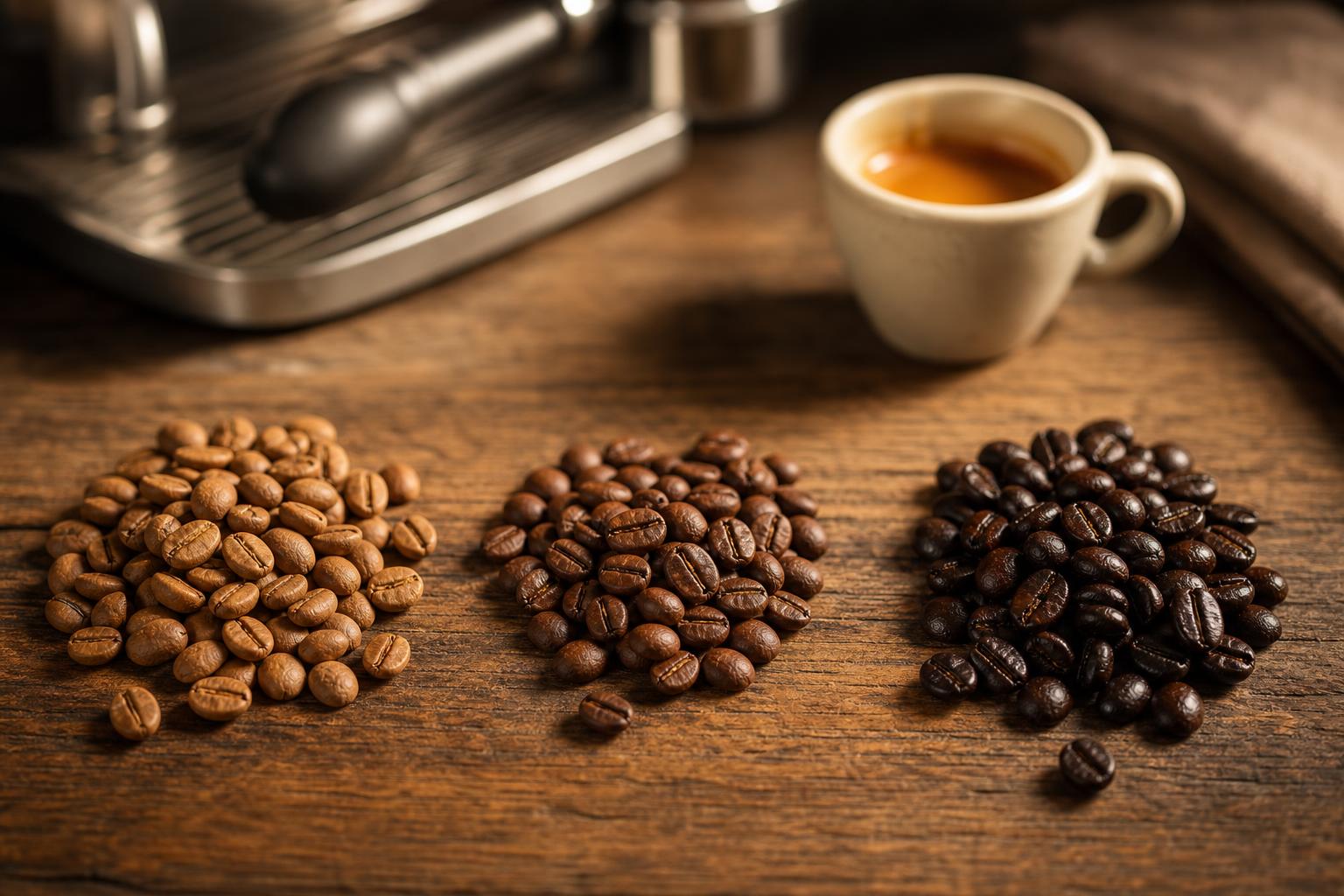
Compare light, medium and dark Italian coffee roasts by flavour, body and brewing method, then find the right beans for espresso, moka pot or filter.
Cover image brief: three groups of Italian coffee beans showing light, medium and dark roast levels, with an espresso cup in the background.
Italian Coffee Roast Levels Explained
Italian coffee is often associated with rich espresso, smooth crema and deep roasted aromas. However, not every Italian coffee is dark. Roast level is only one part of the final flavour. Bean origin, blend composition, processing and brewing also influence the cup.
Understanding the differences between light, medium and dark roast coffee can help you choose beans that match your taste and equipment. If you are comparing products, browse the Italian [coffee beans category] and check the roast and blend information on each product page.
Coffee beans begin as green seeds with mild, grassy aromas. Heat changes their colour, fragrance, structure and flavour. In general, longer and hotter roasting produces a darker bean and a more pronounced roasted character.
Roast terminology is not completely standardised. Terms such as “Italian roast” and “espresso roast” can mean different things from one roaster to another. One brand’s medium-dark coffee may be another brand’s dark roast, so the product description and tasting notes are worth checking.
Broadly speaking:
- Light roast: brighter acidity and more visible origin character, often with fruit, floral or citrus notes.
- Medium roast: a balance of acidity, sweetness, body and roasted flavour.
- Dark roast: fuller body and more pronounced notes of chocolate, toast, spice, bitterness or smoke.
Explore the related selection here: Artisan Premium Coffees.
Explore the related selection here: Caffè Borbone ESE Pods: Red, Blue, Light or Napoli?.
How Roasting Changes Flavour, Aroma and Body
Roasting creates many of the aromas associated with coffee, including toast, nuts, caramel, chocolate and spice. It also reduces moisture and changes the bean’s internal structure, making it easier to grind and extract.
A light roast generally preserves more of the bean’s original character. Depending on the origin and processing method, it may taste clean and lively, with fruit or floral notes. The coffee can also appear more acidic. In coffee, acidity usually describes a fresh, mouth-watering quality rather than spoilage. If the brewing recipe is unsuitable, however, a light roast may taste sharply sour or thin.
As the roast becomes darker, roasting flavours become more prominent. You may notice cocoa, dark chocolate, toasted bread, roasted grain, spice or smoky notes. The coffee may feel fuller and more intense, although a dark roast is not automatically stronger in caffeine or higher in quality.
Body describes the weight and texture of coffee on the palate. Darker roasts often seem heavier, but brewing time, grind size, water temperature and bean origin also have a significant effect.
Light Roast Italian Coffee
Light roast Italian coffee is less associated with traditional bar-style espresso, but it appeals to drinkers who enjoy a more expressive cup. The beans are usually light brown and show little or no oil on the surface.
Typical flavour notes can include:
- citrus, berries or stone fruit
- flowers and herbs
- honey or light caramel
- a clean, tea-like finish
Light roasts are often denser and less forgiving in espresso brewing. They may require a finer grind, higher brewing temperature or longer extraction to reveal their sweetness. This can be rewarding for home brewers who enjoy adjusting their recipe.
For a classic, lower-acidity Italian espresso style, a medium-dark or dark blend may be a more suitable starting point. For filter coffee, light roast beans can highlight delicate aromas and clarity.
Explore the related selection here: Best Italian Decaf Coffee for Espresso Machines.
Medium Roast Italian Coffee
Medium roast Italian coffee sits between the bright character of a light roast and the strong roasted flavour of a dark roast. The beans are generally medium brown, with little surface oil, and can show a broad range of flavours.
Common notes include:
- nuts and almonds
- milk chocolate
- caramel
- toasted cereal
- dried fruit
- gentle spice
Medium roast is a practical starting point for many home drinkers. Depending on the coffee and grind, it can work well in espresso, a moka pot or a filter brewer. It also pairs comfortably with milk while retaining enough flavour to remain noticeable in cappuccino or caffè latte.
If you want to explore Italian coffee without an intensely smoky profile, medium roast beans offer a useful balance between sweetness, body and origin character. See the [medium roast coffee selection] for products that fit this style.
Dark Roast Italian Coffee
Dark roast Italian coffee is a familiar style in traditional espresso culture. The beans are dark brown to nearly black and may have a visible sheen of oil. Oiliness also depends on the bean, packaging and time since roasting.
The flavour profile commonly includes:
- dark chocolate
- toasted nuts
- caramelised sugar
- roasted grain
- spice
- smoky or bittersweet notes
Dark roasting reduces many lighter origin-specific flavours, allowing the roasting character to lead. This can create a powerful and consistent cup, particularly with milk. A full-bodied dark coffee can remain noticeable in cappuccino, caffè latte and macchiato.
There is a difference between pleasantly intense and burnt. A quality dark roast should taste rounded rather than simply ashy. If the coffee is harsh, dry or overwhelmingly bitter, the problem may be the beans, an unsuitable grind or over-extraction.
Explore the related selection here: Ground coffee.
Italian Espresso Roast and Traditional Blends
“Italian espresso roast” is a style rather than a precisely defined technical category. It often refers to a medium-dark or dark blend designed for concentrated espresso with full body, pronounced aroma and a lasting finish.
Traditional Italian blends may combine Arabica and Robusta. Robusta can contribute body, bitterness, earthy notes and persistent crema, while Arabica may add sweetness, fragrance and complexity. The exact balance varies by roaster.
Darker blends became popular for espresso because they deliver a recognisable roasted flavour in a small serving and work well with milk. Nevertheless, espresso does not require a dark roast. Medium and light coffees can also produce excellent espresso when the dose, grind and extraction are adjusted carefully.
Choose a darker blend for a traditional, robust profile. Choose a medium or light roast if you prefer more sweetness, acidity or distinctive origin character. For related products, add an internal link to the [Italian espresso coffee category].
Choosing a Roast for Your Brewing Method
Start with the flavours you enjoy rather than choosing by colour alone. Consider whether you prefer chocolate and toasted notes or fruit and floral aromas, whether you drink coffee black or with milk, and how much recipe adjustment you are willing to do.
Espresso: Medium, medium-dark and dark roasts are traditional choices. Darker blends usually offer a rich, concentrated profile, while medium roasts can provide more sweetness and origin character. Light roast espresso requires careful control of grind size, dose and extraction.
Moka pot: Medium and medium-dark roasts are versatile and full-bodied without necessarily becoming too smoky. Dark roast can also work, but moderate heat is important to avoid harsh flavours.
Filter coffee: Light and medium roasts commonly suit filter brewing because the slower process can reveal delicate aromas and acidity. Medium-dark roast is suitable if you prefer a richer, lower-acidity cup.
French press: Medium and dark roasts can provide satisfying body and depth. Use a coarse grind to reduce sediment and limit over-extraction.
Match the grind to the equipment. Whole beans are preferable when possible because grinding immediately before brewing helps preserve aroma.
Arabica, Robusta and Roast Level
Roast level does not tell the whole story. Bean species and blend composition also influence the final cup.
Arabica is often associated with aromatic complexity, sweetness and fruit, floral, nutty or chocolate notes. Its flavour varies substantially according to origin and processing.
Robusta is commonly associated with heavier body, earthy or woody flavours and more pronounced bitterness. In Italian blends, it may be used to add intensity and persistent crema. Quality varies within both Arabica and Robusta, so species alone does not determine quality.
When choosing Italian coffee beans, check the blend description as well as the roast label. Two dark blends can taste very different if their Arabica-Robusta proportions, origins and roasting profiles differ.
Reading an Italian Coffee Label
Look for the following information on the packaging or product page:
- Roast level: light, medium, dark, medium-dark or espresso roast.
- Bean composition: 100% Arabica or an Arabica-Robusta blend.
- Format: whole beans or pre-ground coffee matched to your equipment.
- Roasting date: more useful for freshness than vague claims.
- Origin information: countries or regions included in the blend.
- Best-before date: useful, but not a replacement for the roasting date.
- Packaging: a sealed bag with a one-way valve can help protect beans from oxygen after roasting.
Choose coffee whose roast, blend and flavour profile suit your preferences. A premium-sounding description alone does not determine quality.
Storing and Brewing Italian Coffee at Home
Store coffee in an airtight, opaque container in a cool, dry cupboard. Keep it away from heat, light, steam and strong aromas. A refrigerator is generally inconvenient for everyday storage because temperature changes and moisture can affect the beans.
Grind immediately before brewing whenever possible. Use fresh-tasting water and keep the equipment clean, especially the espresso basket, portafilter, moka pot funnel and French press mesh.
For espresso, adjust one variable at a time. If the coffee tastes sour and thin, a finer grind or slightly longer extraction may help. If it tastes bitter and dry, a coarser grind or shorter extraction may be appropriate.
For a moka pot, use moderate heat and remove it when the coffee has finished flowing. Do not press the coffee tightly into the basket.
Which Italian Roast Level Is Right for You?
Choose light roast Italian coffee if you enjoy bright acidity, delicate aromas and fruit or floral flavours, and do not mind adjusting your brewing method.
Choose medium roast Italian coffee if you want a balanced, versatile bean for espresso, moka pot or filter brewing. It is often a useful style for exploring different flavour profiles.
Choose dark roast Italian coffee if you prefer a bold, full-bodied cup with chocolate, toasted and bittersweet notes, particularly for traditional espresso or milk-based drinks.
There is no single best roast level for everyone. Match the beans to your preferred flavour and equipment, then make small brewing adjustments. Once you find a style you enjoy, trying another Italian blend or roast level can be a rewarding next step.