
Blog
How to Keep Opened Italian Coffee Beans Fresh
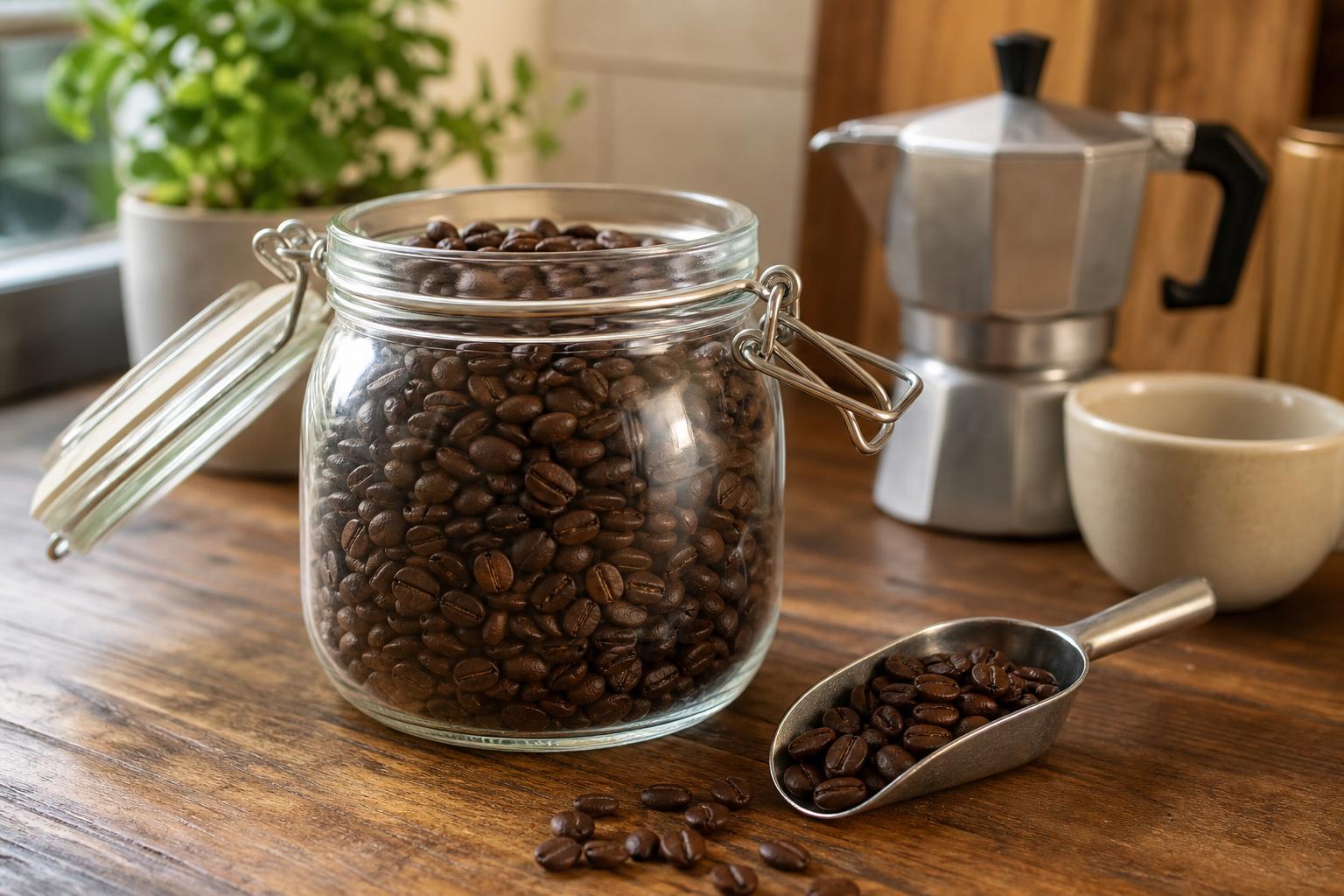
Learn how to store opened Italian coffee beans and protect their aroma from air, light, heat and moisture, whether you use espresso, moka pot or filter.
Freshly opened Italian coffee beans can deliver a fuller aroma and balanced flavour, but proper storage matters once the pack is opened. The best approach is simple: limit exposure to air, light, heat and moisture, and buy quantities you can use while the coffee is still enjoyable. Here is how to store Italian coffee beans after opening for espresso, filter coffee or moka pot brewing.
How to Store Italian Coffee Beans After Opening
After opening, transfer the beans to a clean, airtight coffee storage container, or close the original bag as securely as possible. Keep it in a cool, dry cupboard away from the cooker, oven, sink, dishwasher and direct sunlight.
Open the container only when you are ready to measure or grind the beans. Every opening introduces fresh air, so brief, purposeful access helps protect the aroma.
For the best results:
- Store whole beans rather than pre-ground coffee whenever possible.
- Choose a container that is reasonably full, leaving less air around the beans.
- Use a clean, dry scoop or spoon.
- Seal the container immediately after removing the required amount.
- Grind the beans just before brewing.
Italian coffee beans are not difficult to care for. Consistent habits are more useful than complicated equipment.
Explore the related selection here: How Much Coffee Goes in a Double Espresso?.
Why Coffee Beans Lose Freshness After Opening
Coffee beans begin to change after roasting. Once the packaging is opened, oxygen gradually affects their aroma and flavour. Ground coffee changes more quickly because more surface area is exposed to air, but whole beans also need protection.
Four factors are especially important:
Air
Oxygen gradually reduces the coffee’s aromatic character. Beans left in an open bag or loosely closed packet may taste flatter over time.
Light
Strong light can affect coffee quality, especially when beans are kept in clear containers near a window. An opaque container or dark cupboard is preferable.
Moisture
Coffee beans should remain dry. Moisture can encourage the beans to absorb unwanted odours and may contribute to an uneven brewing result. Avoid storing coffee beside a kettle, sink or dishwasher where steam is common.
Heat
Heat can accelerate the loss of freshness. A cupboard with a stable room temperature is generally better than a shelf above the hob or beside an oven.
The goal is not to stop coffee from changing completely, but to protect its aroma and flavour for as long as reasonably possible.
The Best Place to Keep Opened Italian Coffee Beans
A cool, dark and dry kitchen cupboard is usually the best location. Choose a stable area that does not become hot during cooking.
The cupboard should be:
- Away from direct sunlight
- Away from ovens, hobs and radiators
- Separate from strong-smelling foods
- Dry and exposed to little steam
- Convenient enough for you to seal the container after every use
Coffee can absorb surrounding odours, so avoid storing it beside spices, strongly flavoured tea, cleaning products or open food packets. A dedicated pantry or cupboard section is ideal.
Do not leave the container on the worktop if the kitchen receives direct sunlight or becomes warm during the day. Convenience matters, but protection from heat and light matters more.
Choose the Right Coffee Storage Container
A good coffee container should have an airtight seal and be easy to clean. Opaque or dark-coloured containers are preferable because they limit exposure to light.
An airtight seal
The lid should close firmly without gaps. A clip-top jar with a reliable seal, a screw-top container with a suitable gasket or a purpose-made coffee canister can all work well.
The right size
A container that is too large leaves unnecessary air around the beans. Choose a size that suits the quantity you normally buy. If you purchase larger packs, dividing the beans into smaller airtight containers may be practical.
An opaque design
If the container is transparent, keep it inside a dark cupboard. Otherwise, select a design that blocks light.
Easy cleaning
Coffee oils can build up inside a container. Wash and dry it thoroughly before refilling, and do not add fresh beans to old residue. Stale oils may affect the flavour of a new batch.
A decorative glass jar can work if it closes securely and is kept away from light. Its appearance is less important than its seal, cleanliness and location.
How to Store Coffee Beans Step by Step
Follow this process whenever you open a new pack of Italian coffee beans:
1. Check the packaging. Note the roast or best-before information where provided, and open a new pack when you are ready to use it.
2. Prepare the container. Make sure it is clean, completely dry and large enough for the quantity you plan to store.
3. Transfer the beans. Pour them into the container without crushing or handling them unnecessarily.
4. Seal the container. Close the lid firmly as soon as the beans are inside.
5. Choose a suitable location. Place the container in a cool, dark and dry cupboard.
6. Measure only what you need. Open the container briefly when preparing coffee.
7. Grind just before brewing. This helps preserve more aroma than grinding a large quantity in advance.
8. Clean between batches. Empty the container and wipe or wash it before adding a fresh pack.
If the original bag has a reliable resealable closure and you will use the beans quickly, it may be sufficient. Press out excess air where possible and close the seal carefully after every use. For longer storage after opening, a dedicated airtight container offers more consistent protection.
Explore the related selection here: Best Italian Decaf Coffee for Espresso Machines.
Should You Keep Coffee Beans in the Fridge or Freezer?
For everyday use, the fridge is usually not the best place for coffee beans. Fridges contain moisture and many aromas, while repeated movement between cold and room temperature can create condensation. Coffee may also absorb food odours if the packaging is not completely sealed.
Freezing can be considered for a larger quantity that you will not use for some time, but it requires careful packaging. Divide the beans into small, airtight portions before freezing so you do not repeatedly open and reseal one large container. Allow each portion to reach room temperature while still sealed before opening it, which helps reduce condensation on the beans.
For most home coffee drinkers, the simplest option is to buy a quantity that can be used within a reasonable period and store it in an airtight container in a cupboard. Refrigeration is not necessary, and freezing is better reserved for planned longer-term storage than daily convenience.
How Long Do Italian Coffee Beans Stay Fresh After Opening?
There is no single answer for how long beans remain at their best after opening. The result depends on the roast, packaging, storage conditions, how often the container is opened and your expectations of flavour.
Beans may remain usable for some time, but their aroma will gradually become less pronounced. A well-sealed, opaque container is likely to protect their character better than an open bag near heat and light.
Use these practical guidelines:
- Buy pack sizes that match your normal consumption.
- Seal the beans promptly after every use.
- Keep them whole and grind only what you need.
- Treat the best-before date as a guide, not a guarantee of peak flavour.
- Use your senses as well as the date on the pack.
Freshness is particularly noticeable in espresso and moka pot coffee, where the beans contribute much of the aroma and body. If you drink coffee occasionally, smaller packs may be more suitable than a large bag.
Storage Tips for Moka Pot Coffee
Moka pot storage follows the same basic principles, but careful handling is particularly important if the coffee is ground. Keep whole Italian coffee beans whole until you are ready to prepare the coffee.
For a moka pot:
- Grind a fresh dose shortly before brewing.
- Use a grind suitable for moka pot preparation rather than an extremely fine espresso grind.
- Keep the grinder clean, as old coffee oils can affect the taste.
- Measure enough coffee for the basket without compressing it.
- Return remaining beans to the airtight container immediately.
- Store the moka pot separately in a dry place and clean it before use.
If you buy coffee already ground for a moka pot, keep the packet tightly sealed and use smaller quantities where practical. Ground coffee has more exposed surface area, so it can lose aromatic freshness more quickly.
Common Coffee Storage Mistakes to Avoid
Avoid these common mistakes when storing Italian coffee:
- Leaving the bag open: A loosely folded top does not reliably protect the beans from air.
- Keeping coffee above the hob: Heat and cooking steam create an unsuitable environment.
- Using a clear jar in sunlight: Light reaches the beans throughout the day.
- Storing coffee in a damp cupboard: Moisture and odours can affect the beans.
- Mixing old and new beans: This makes freshness harder to manage and can transfer stale oils.
- Filling an unclean container: Residue from an earlier batch may affect the next one.
- Grinding a week’s supply: Pre-ground coffee can lose aroma more quickly.
- Opening the container repeatedly: Measure the day’s coffee in one step when possible.
- Buying more than you can use: A large pack is not always better if it stays open for a long time.
The most reliable storage method is one you can follow easily every day.
How to Tell Whether Your Coffee Beans Have Lost Freshness
Older beans are not necessarily unusable, but they may produce a less aromatic cup. Look for changes in smell, flavour and brewing behaviour.
The beans may have lost freshness if:
- The aroma is faint, flat or noticeably stale.
- The brewed coffee tastes dull or lacks its usual character.
- The flavour seems unbalanced compared with earlier cups.
- The beans have absorbed an unusual cupboard smell.
- Espresso or moka pot coffee has less aroma despite the same preparation method.
Do not rely on appearance alone. Beans can look normal while their aroma has faded. If they smell mouldy, damp or otherwise unpleasant, it is better not to use them. A small test brew can help you decide whether the coffee still meets your expectations.
A Simple Routine for Fresher Italian Coffee at Home
Choose a pack size that suits how often you brew. Once opened, transfer the beans to a clean, airtight container if the original packaging is not sufficiently protective. Store it in a dark cupboard and keep the beans whole until brewing time.
Before making coffee, take out the dose you need, grind it freshly and close the container. Clean your grinder regularly and wash the storage container whenever you finish a batch. If you use a moka pot, rinse and dry it properly after use so old coffee residue does not affect future brews.
This routine supports better consistency without requiring specialist equipment.
Conclusion: Keep Opened Italian Coffee Beans Fresh for Longer
The best way to store coffee beans after opening is to protect them from air, light, heat and moisture. Use a clean, airtight container, keep it in a cool, dark cupboard and grind only the amount needed for each brew. Avoid the fridge for everyday storage, and consider freezing only when you have a clear plan for airtight portioning.
Choose a quantity you can use comfortably, store it carefully and enjoy each moka pot, espresso or filter coffee at its best.