
Blog
Arabica vs Robusta: Choosing an Italian Coffee Blend
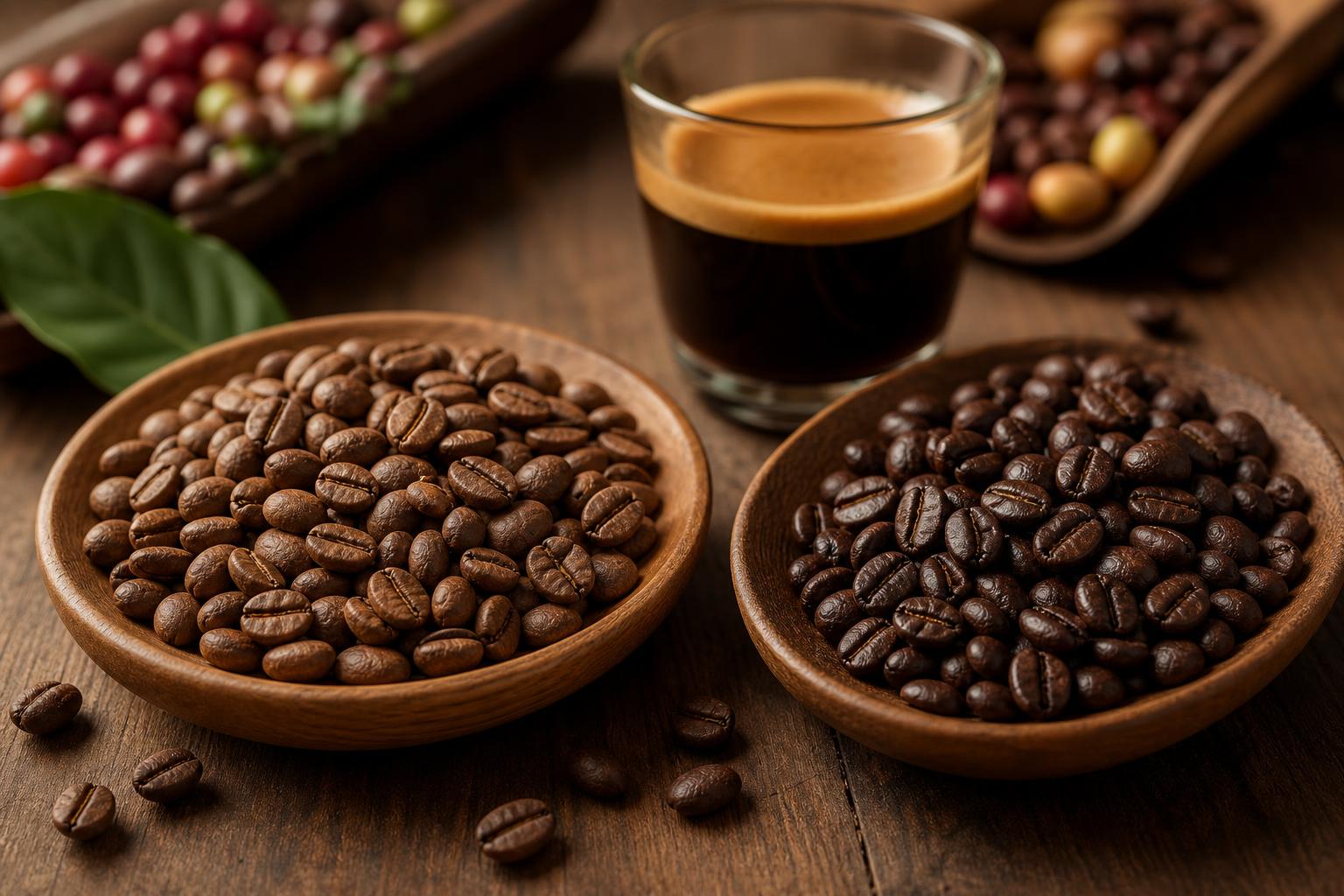
Compare Arabica and Robusta coffee by flavour, caffeine, crema and body, then choose the right Italian blend for espresso, moka or milk drinks.
If you are choosing coffee for an espresso machine, moka pot or bean-to-cup machine, Arabica and Robusta are useful starting points. However, origin, processing, roast level and blend ratio also shape the final cup. Understanding the typical differences between these two coffee species can help you choose an Italian coffee blend that matches your taste and brewing method.
Arabica vs Robusta: the essential difference
Arabica and Robusta are the two coffee species most commonly used in commercial blends. They differ in growing conditions and typical cup profile.
Arabica is generally associated with aromatic, nuanced flavour. Depending on its origin and roast, it may show notes of fruit, flowers, nuts, chocolate or caramel. Robusta is usually fuller-bodied and more intense, with stronger bitterness and earthy, woody, cocoa-like or cereal notes.
Robusta typically contains more caffeine than Arabica and contributes strongly to crema and body in espresso. Arabica often brings greater aromatic complexity and a smoother character.
These are general tendencies rather than fixed rules. High-quality Robusta can be refined, while poorly roasted Arabica may taste flat or harsh. Green coffee quality, roasting and blending matter as much as the species.
What is Arabica coffee?
Arabica coffee comes from the Coffea arabica species and is valued for expressive flavour and aroma. It is often lighter in body than Robusta but more complex in the cup.
Typical characteristics include:
- Floral, fruity or citrus-like aromas
- Sweet notes such as caramel, honey or ripe fruit
- Nutty, chocolate or biscuit flavours
- Softer, more rounded bitterness
- A relatively silky mouthfeel
Arabica beans are often used in speciality coffees and premium Italian coffee blends, either alone or alongside Robusta. However, “100% Arabica” does not automatically mean a coffee will suit every drinker. Origin and roast level can significantly change the result.
A darker-roasted Arabica may taste intensely chocolatey and bittersweet rather than fruity. A lighter roast may preserve more acidity and origin character, which can suit filter coffee but feel less familiar to someone seeking a traditional, rich Italian espresso.
What is Robusta coffee?
Robusta comes from the Coffea canephora species and is important in traditional espresso production, including many Italian coffee blends.
Robusta is typically recognised for:
- Firm, intense body
- Pronounced bitterness
- Earthy, woody or cocoa-like flavours
- Dense mouthfeel
- Strong crema in espresso
Poorly processed or roasted Robusta can taste rough, rubbery or excessively bitter. High-quality Robusta can instead add depth, sweetness and structure without dominating the cup.
Its physical and chemical characteristics can help produce persistent crema and a substantial mouthfeel. Robusta can also make milk-based drinks taste more coffee-forward. Its naturally higher caffeine content may contribute to a more intense impression, although caffeine in a serving also depends on the blend ratio, dose, brewing method and drink size.
Explore the related selection here: Best Italian Decaf Coffee for Espresso Machines.
Arabica and Robusta in Italian coffee blends
An Italian coffee blend may contain only Arabica, only Robusta or a combination of both. The blend ratio helps a roaster balance aroma, body, bitterness and espresso performance.
A blend with a high proportion of Arabica may offer:
- More fragrance
- Greater sweetness and flavour detail
- A smoother, less forceful finish
- Light to medium body
A blend with more Robusta may provide:
- Greater body and intensity
- Stronger bitter-chocolate character
- More persistent crema
- A fuller base for cappuccino and latte drinks
A combination aims to bring these strengths together. Arabica may supply lift and aromatic detail, while Robusta adds body and a longer finish. The percentages on the packaging are useful, but they are not a complete quality assessment. Two 70:30 Arabica-to-Robusta blends can taste very different because their origins, roast profiles and bean quality may differ.
Flavour, aroma and mouthfeel
Arabica often leads with aroma. You may notice flowers, dried fruit, citrus, nuts or chocolate before tasting it. On the palate, it can feel layered, with gentle acidity that adds brightness. Balanced acidity is not the same as unpleasant sourness; it can make coffee taste lively rather than flat.
Robusta generally emphasises weight and intensity. It may taste earthy, woody, cocoa-like or cereal-like, with more noticeable bitterness. Its texture can feel dense and coating, particularly in espresso.
Roast level changes this balance. Darker roasting tends to bring toasted, bitter and chocolate notes, while lighter roasting may preserve more origin character. Consider whether you prefer fragrance and sweetness or a dense, powerful espresso that stands up to milk.
Explore the related selection here: Ground coffee.
Caffeine and natural compounds
Robusta typically contains more caffeine than Arabica. The caffeine in a brewed drink also depends on:
- Amount of coffee used
- Blend ratio
- Grind size
- Brewing time
- Drink size
- Preparation method
A short espresso can taste intense without necessarily containing more caffeine than a much larger brewed coffee. Likewise, 100% Arabica is not caffeine-free or automatically mild.
Coffee contains naturally occurring compounds that influence bitterness, aroma, body and aftertaste. Roasting transforms these compounds and creates flavours associated with toasted bread, nuts, caramel and chocolate. This is why coffees made from the same species can taste very different.
If caffeine sensitivity is important, check the available product information and consider portion size and frequency. Species is a broad indication, not a precise measure of caffeine in the cup.
Crema, body and espresso performance
Crema is the golden-brown foam that forms on top of espresso. It develops when gases and coffee compounds emulsify under pressure. Thick crema can be appealing, but it is not proof of superior coffee.
Robusta often contributes to more abundant, persistent crema, making it popular in traditional Italian espresso blends designed for a strong, full-bodied cup. Arabica can also produce good crema when fresh and correctly roasted, although it may be lighter and less persistent.
For espresso, a blend containing Robusta may offer more body, a stronger finish and greater resistance to dilution in milk. Arabica-led blends may be preferable if you want more aromatic definition, a softer texture and less bitterness. The right choice depends on your palate and how you drink coffee.
Why Italian coffee blends combine Arabica and Robusta
Italian coffee blending traditionally focuses on creating a dependable, balanced espresso rather than highlighting a single origin. Arabica and Robusta complement one another, allowing the roaster to create a particular style.
Arabica may contribute fragrance, sweetness and complexity. Robusta can add body, crema and intensity. Together, they can create coffee suited to espresso, moka pot coffee or milk-based drinks.
Blending also gives roasters more control over consistency. Coffee is an agricultural product, so harvests can vary. Combining beans with different characteristics can help maintain a familiar taste from one batch to another. There is no universal ideal ratio: the best Italian coffee blend is the one whose balance matches your preferred cup.
How roasting changes a blend
Roasting is just as important as the choice between Arabica and Robusta. Green coffee beans have little resemblance to the finished roasted product. Heat develops the aroma, colour, body and bitterness associated with coffee.
A lighter roast may preserve more acidity and origin character, making Arabica’s floral, fruity or citrus notes more noticeable. A medium roast often balances sweetness, aroma and body and can work well for espresso, moka pot coffee and some automatic machines.
A darker roast tends to emphasise toasted, smoky, bitter and chocolate-like notes. It can make both species taste more intense and reduce the distinction between their origin characteristics. Roast descriptions are not perfectly standardised, so compare tasting notes and preparation advice where available.
Which blend is best for your brewing method?
Your equipment should influence your choice.
Espresso machine: Choose a blend designed for espresso, with enough body to produce a balanced shot. Arabica-led coffee may suit black espresso drinkers who prefer aroma and sweetness. A blend containing Robusta can provide a denser result and work well in cappuccinos or lattes.
Moka pot: Moka pot coffee is concentrated and can highlight bitterness if the coffee is very darkly roasted or ground too finely. A balanced medium or medium-dark Italian blend is a useful starting point. If the result tastes harsh, try a softer Arabica-led blend, a slightly coarser grind or gentler heat.
Bean-to-cup machine: Choose beans roasted for espresso that are not excessively oily. Both Arabica and Robusta blends can work. Make small changes to the strength or grind settings and assess the result gradually.
Filter or cafetière: Arabica-led coffee is often a natural starting point because its aroma and flavour detail can show clearly in a longer brew. If you prefer a more substantial cup, a small proportion of Robusta can add weight.
Choosing a blend for your taste
For espresso without milk, an Arabica-led Italian blend with fruit, floral, nutty or chocolate notes may suit you. If you prefer powerful, bittersweet espresso, consider a blend with a noticeable Robusta proportion.
For cappuccino, latte or flat white, body and intensity matter because milk softens sharper coffee flavours. A balanced Arabica and Robusta blend can remain distinctive without requiring an especially large dose.
Also consider:
- Tasting notes: Use them as guidance, not guarantees.
- Roast date: Fresher coffee usually offers more aroma after suitable resting time.
- Whole beans: Grinding immediately before brewing helps preserve fragrance.
- Roast appearance: Very oily beans may not suit every bean-to-cup machine.
- Brewing advice: Preparation recommendations can reveal the roaster’s intended style.
If you are unsure, choose a versatile medium-roast blend and adjust your recipe before moving to a more extreme profile.
Brewing and storing Italian coffee at home
For espresso, use a consistent grind, accurate dose and even distribution in the portafilter. Aim for balanced extraction rather than a particular crema thickness. If the coffee tastes sour and thin, try a finer grind or longer extraction. If it tastes dry and bitter, try a slightly coarser grind or shorter extraction.
For moka pot coffee, fill the lower chamber up to the valve, use a suitable grind and do not compress the grounds. Brew over moderate heat and remove the pot when the coffee finishes flowing. Stir before serving to combine the different portions evenly.
With a bean-to-cup machine, clean the grinder, brewing unit and milk system according to the manufacturer’s instructions. Make small adjustments and allow the machine to settle before judging the result.
Store Italian coffee beans in an airtight, opaque container in a cool, dry cupboard. Keep them away from heat, light, moisture and strong-smelling foods. Grind only what you need and retain the packaging information if you want to check the blend ratio or brewing advice.
Arabica and Robusta are not labels for good and bad coffee. Arabica often brings aroma and detail, while Robusta provides body, crema and intensity. Italian coffee blends use these characteristics in different proportions to create distinctive espresso styles. Choose according to your preferred flavour, drink and equipment, then refine the grind and recipe at home.