
Blog
Whole Bean or Ground Italian Coffee for Espresso?
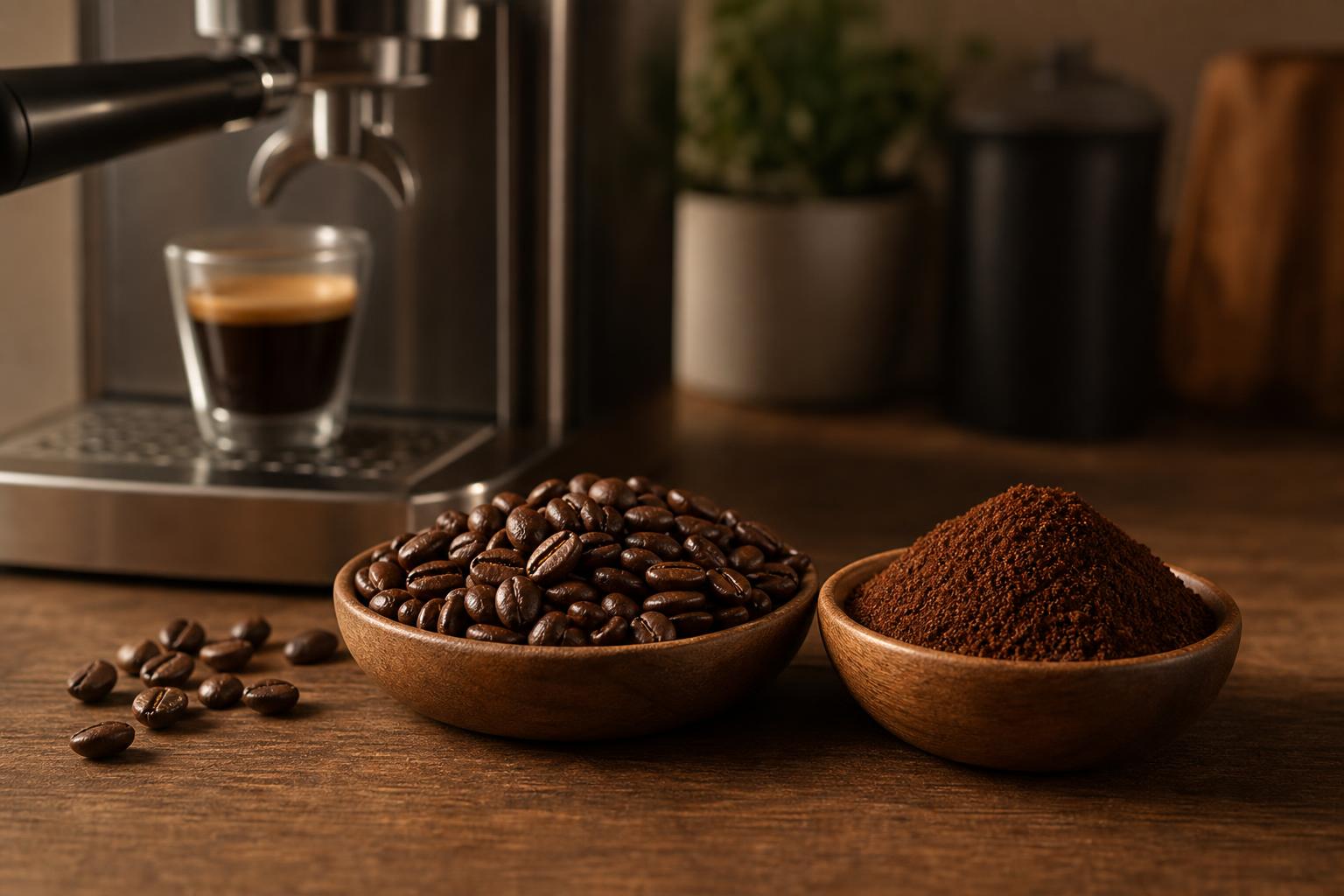
Compare whole bean and ground Italian coffee for home espresso. Learn how freshness, grind size, equipment, flavour and convenience affect your choice.
Choosing between whole bean and ground Italian coffee can noticeably affect your home espresso. The best option depends on your equipment, preferred flavour, brewing routine and how much control you want over each shot.
Whole Bean vs Ground Italian Coffee: A Quick Answer
Whole bean Italian coffee is usually the better choice for freshness, flavour control and recipe adjustment. Grinding the beans immediately before brewing can help preserve aroma and lets you change the grind size to suit your espresso machine.
Ground Italian coffee is more convenient. It requires no grinder and can produce enjoyable espresso when the grind matches your machine and the coffee is stored properly after opening.
Choose whole bean coffee if you:
- Own an espresso-capable burr grinder.
- Enjoy adjusting grind size, dose and extraction.
- Brew regularly enough to use the beans while they remain aromatic.
- Want to use the same coffee for different brewing methods.
Choose ground coffee if you:
- Want a quick, simple preparation routine.
- Do not own a suitable grinder.
- Use a pressurised espresso basket or moka pot.
- Make espresso only occasionally.
Both formats can work well. Coffee quality, roast style, grind, packaging and brewing equipment all influence the final cup.
Explore the related selection here: Coffee beans.
Why Freshness Matters for Espresso
Coffee gradually changes after roasting and loses some aromatic character over time. This process is faster after grinding because more of the coffee is exposed to air. For this reason, freshly ground coffee often produces a more fragrant and defined espresso than pre-ground coffee that has been open for a while.
Freshness is not the only factor, however. Properly packaged and stored ground coffee can still be practical and enjoyable. When choosing Italian coffee, check the packaging for:
- Roast date, when provided.
- Best-before date.
- Recommended brewing method.
- Grind format, such as espresso or moka grind.
- Packaging designed to reduce exposure to air, light and moisture.
Coffee does not become unusable immediately after a particular date, but its flavour may become less lively. After opening, protect both beans and ground coffee from heat, light, air and humidity.
Whole Bean Italian Coffee: Benefits and Drawbacks
Whole beans give you control from the moment you open the package. You can grind only the amount needed for each brew, leaving the rest less exposed to air.
Benefits of whole beans
- More control: You can adjust the grind for your machine, basket and recipe.
- Fresh grinding: Grinding immediately before brewing can help retain aroma.
- Greater flexibility: The beans may be suitable for espresso, moka pot or other methods when ground appropriately.
- Recipe development: You can fine-tune dose, grind size and extraction.
- Less exposure: Unused beans generally retain their character better than opened ground coffee.
Whole beans are useful when comparing traditional Italian espresso blends with lighter, more modern roast profiles. Traditional blends often focus on body and familiar roasted flavours, while other coffees may highlight sweetness, acidity or more distinctive aromatic notes.
Drawbacks of whole beans
- You need a grinder capable of producing a consistent espresso grind.
- Grinding adds time and noise to your routine.
- Dialling in a new coffee can create some waste.
- Espresso preparation has a learning curve.
A blade grinder is usually unsuitable for espresso because it produces an uneven mixture of fine and coarse particles. An espresso burr grinder offers more consistent grinding and finer adjustment.
Ground Italian Coffee: Benefits and Drawbacks
Ground Italian coffee is ready to measure and brew. It can be a sensible option when convenience matters more than maximum control.
Benefits of ground coffee
- Convenience: There is no grinding step.
- Lower initial equipment cost: You do not need to buy an espresso grinder.
- Simple preparation: A suitable pre-ground coffee can be easy to use consistently.
- Less mess and noise: This can be helpful in busy or shared kitchens.
- Practical for occasional use: You can prepare espresso without maintaining extra equipment.
Ground coffee often works particularly well with pressurised filter baskets, which are more forgiving of variations in grind and tamping. It can also work in a moka pot when the coffee is ground specifically for that method.
Drawbacks of ground coffee
- You cannot alter the grind size if extraction is too fast or slow.
- Aroma fades more quickly after opening.
- The grind may not suit every machine or basket.
- An opened pack may lose quality before it is finished.
Do not assume that every product described as Italian coffee has the same grind. Espresso, moka pot and filter grinds are not interchangeable. Select a format intended for your equipment.
Flavour and Aroma Comparison
The main difference between whole bean and ground coffee is usually noticeable in aroma and control. Beans ground immediately before brewing may produce a more expressive espresso, with clearer notes such as cocoa, toasted nuts, caramel or fruit.
Pre-ground coffee may taste softer or less aromatic after prolonged exposure to air. The result depends on the original roast, packaging, storage and how quickly the coffee is used. A traditional dark roast can still deliver a full-bodied, bittersweet espresso even when its more delicate aromas have faded.
Freshness should also be separated from roast style:
- Dark roasts: Often bring deeper roasted, bittersweet and cocoa-like flavours.
- Medium roasts: May balance roast character, sweetness and acidity.
- Blends: Can provide a rounded and consistent profile.
- Single-origin coffees: May show more distinctive regional characteristics.
There is no single best Italian coffee for every home barista. Your flavour preference, milk use and equipment should guide the decision.
Which Option Suits Your Espresso Machine?
A traditional espresso machine with a non-pressurised basket generally benefits from freshly ground coffee and a capable burr grinder. You can adjust the grind until water flows through the coffee at a suitable rate and the shot tastes balanced.
A machine with a pressurised basket is more forgiving. Ground Italian coffee may be the better choice if you want a simple routine and do not want to invest in an espresso grinder.
For fully automatic bean-to-cup machines, use whole beans in the built-in hopper unless the manufacturer specifies another option. The machine grinds the coffee automatically, although you may still need to adjust its grind and strength settings gradually.
For a moka pot, choose coffee ground for moka rather than automatically using espresso-ground coffee. The two methods use different brewing designs, so the appropriate grind depends on the equipment.
Choosing the Right Grind for Italian Espresso
Espresso generally requires a fine, even grind, but there is no universal setting. The correct grind depends on the coffee, dose, basket, machine and recipe.
Use the espresso flow and taste as practical guides:
- If the coffee runs very quickly and tastes thin or sharp, the grind may be too coarse, the dose too low or the coffee unevenly distributed.
- If the flow is extremely slow or stops, the grind may be too fine, the dose too high or the coffee tamped too firmly.
- If the shot tastes dry and bitter, try a slightly coarser grind or shorter extraction.
- If it tastes sour or underdeveloped, a slightly finer grind or longer extraction may help.
Make one change at a time whenever possible. With whole beans, grind a small dose immediately before brewing and adjust gradually. With pre-ground coffee, you cannot change the particle size, so you may need to adjust the dose or select another coffee.
How to Store Italian Coffee
Keep coffee in an airtight, opaque container in a cool, dry cupboard. Store it away from sunlight, steam and heat from the oven or hob.
Avoid the refrigerator because moisture and food odours can affect the coffee. Freezing may be considered for carefully portioned coffee that will not be used for a long time, but condensation and repeated temperature changes can cause problems.
For everyday storage:
- Buy an amount you can use while it remains aromatic.
- Reseal the original package securely when possible.
- Transfer coffee to a clean airtight container if needed.
- Do not leave ground coffee exposed beside the machine.
- Use dry utensils when measuring.
Whole beans generally retain their character better than ground coffee, but they still require protection from air and humidity.
Cost, Convenience and Waste
Ground coffee usually has the lower starting cost because it does not require a separate grinder. It is also faster, which can be important on busy mornings or for occasional espresso drinkers.
Whole beans require an investment in a grinder, especially with a traditional espresso machine. In return, the grinder provides more flexibility and lets you prepare only the amount needed. Waste depends on your routine: whole beans may be wasted while dialling in a new coffee, while ground coffee may be wasted if the grind is unsuitable or the pack is used too slowly.
Consider the complete setup rather than comparing only the price of the coffee. Include equipment, preparation time, storage and how frequently you brew.
When to Choose Whole Bean Italian Coffee
Whole bean Italian coffee is a strong choice when you:
- Have a reliable burr grinder.
- Make espresso several times a week.
- Enjoy experimenting with extraction.
- Want to switch between coffee styles or brewing methods.
- Prefer to grind immediately before brewing.
- Use a traditional machine with a non-pressurised basket.
When Ground Italian Coffee Is Better
Ground Italian coffee may suit you better when ease of use is the priority. Consider it if you:
- Do not own a suitable grinder.
- Make espresso occasionally.
- Want a quick morning routine.
- Use a pressurised espresso basket.
- Prefer moka pot coffee in the correct grind format.
- Have limited space or want to avoid extra equipment costs.
Choose the smallest practical pack if you use coffee infrequently, and reseal it after every use.
Final Recommendation
Whole bean Italian coffee is usually the better choice for freshness, flavour control and espresso experimentation, provided you own a suitable burr grinder. Ground Italian coffee is the more convenient option and can work very well when its grind matches your machine.
Before buying, check the roast style, intended brewing method, grind format and packaging. Choose the option that fits your real home-brewing routine. A consistent and practical setup will help you enjoy Italian espresso more than unnecessary equipment or complicated settings.