
Blog
ESE Pods vs Nespresso-Compatible Capsules for Home
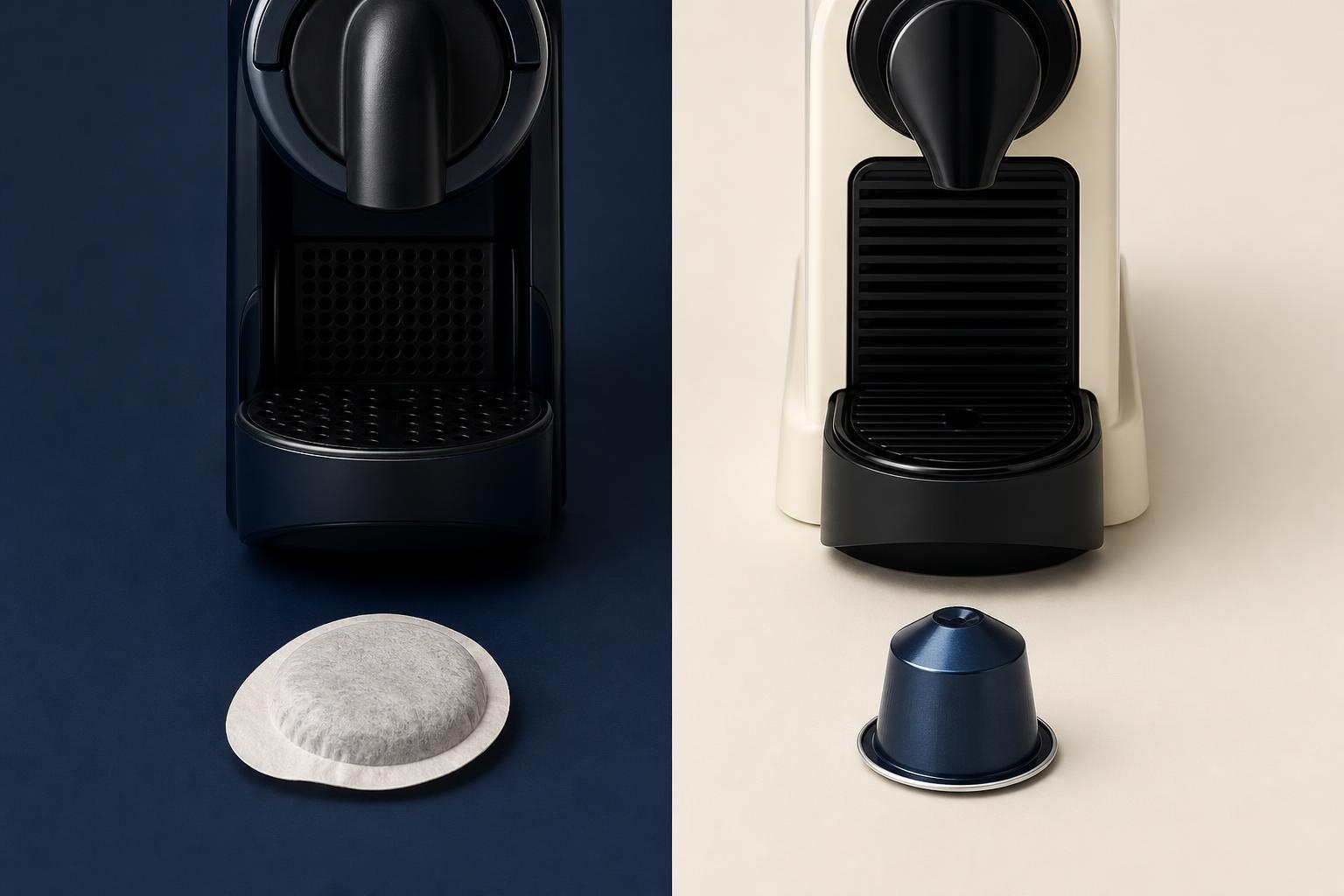
Compare ESE pods and Nespresso-compatible capsules for home coffee. Learn how machine fit, brewing, taste, cost and disposal can guide your choice.
Choosing between ESE pods and Nespresso-compatible capsules involves more than taste. The right option depends on your coffee machine, how much involvement you want in each brew, and how you prefer to store and dispose of your coffee portions. This guide compares the two formats so you can find one that suits your home routine.
Two popular formats for making coffee at home
ESE pods and Nespresso-compatible capsules both offer pre-portioned coffee, but they are designed for different machines and work in different ways. ESE stands for Easy Serving Espresso. An ESE pod is a measured portion of ground coffee enclosed in paper filters. A Nespresso-compatible capsule is a portion of ground coffee in a rigid capsule designed for a compatible machine system.
Neither format is automatically the better choice. ESE pods may appeal if you want an espresso-style routine and prefer a paper-based portion. Capsules can suit people who value a quick, contained brewing process and a broad choice of blends. The first step is to check which format your machine accepts.
Explore the related selection here: Nespresso compatible coffee capsules.
Explore the related selection here: How Water Quality Affects Espresso at Home—and What Water to Use.
Explore the related selection here: Tiramisu Coffee Recipe: Make It at Home.
What are ESE pods?
ESE coffee pods are compact, individually portioned servings of ground coffee sealed between paper filters. The format is designed for espresso preparation, and many ESE pods follow a common size standard. Even so, check the machine instructions and the pod packaging rather than assuming every pod will work in every machine.
To brew, place the pod in the machine’s designated holder and follow the manufacturer’s instructions. The paper keeps the coffee grounds together during extraction, which can make the used pod easy to lift out. Depending on the machine, you may need to remove and rinse the holder after brewing.
Coffee brands, including Italian roasters, offer ESE pods in a range of espresso styles. Options may include Arabica and Robusta blends or single-origin coffees. Because the coffee is already ground and portioned, you do not need to weigh beans or fill a filter basket. Some espresso machines accept ESE pods as well as loose ground coffee, but this depends on the model and whether it has the correct filter holder.
ESE pods are not the same as soft coffee pads made for other types of machines. Paper portions can look similar while having different sizes or brewing requirements, so look for clear ESE compatibility on the packaging.
What are Nespresso-compatible capsules?
Nespresso-compatible capsules are pre-portioned servings of ground coffee in rigid capsules made to fit certain Nespresso machine systems. A range of coffee brands produces them; “compatible” describes the intended machine fit, not who made the coffee. They are not necessarily made by Nespresso.
Compatibility depends on the system. Many products are designed for machines in the Nespresso Original system, but you should not assume that they will work with Vertuo machines or other capsule systems. Check the capsule packaging against the exact model of your machine before buying.
The capsule keeps the coffee enclosed until brewing. In a compatible machine, the capsule is pierced or otherwise opened as part of the brewing process, and hot water passes through it. The machine then directs the coffee into your cup. Used capsules are collected or removed according to the machine’s design.
The routine is usually straightforward: insert a capsule, select a drink size if your machine offers that function, and start brewing. Capsules come in different roast styles, blends and intensities. However, the terms and scales used to describe them vary between brands.
Explore the related selection here: ESE Pod Coffee Machines (44 mm).
ESE pods vs Nespresso-compatible capsules: key differences
The main difference is not simply paper versus a rigid capsule. It is the combination of machine compatibility, brewing process, coffee selection and handling after brewing.
Machine and format
- ESE pods: Require an ESE-compatible machine or a suitable ESE holder in certain espresso machines.
- Nespresso-compatible capsules: Must match the capsule system your machine uses.
- Both: Need a compatibility check before purchase. Similar appearance does not guarantee a fit.
Brewing and control
- ESE pods: Provide a pre-measured espresso portion. Depending on the machine, you may handle a pod holder when loading and removing the pod.
- Capsules: Can feel more contained, with a machine designed around inserting and ejecting capsules.
- Both: Reduce the need to measure coffee. The machine determines factors such as drink size, temperature and pressure.
Coffee choice
- ESE pods: Offer a selection of Italian coffee pods and other espresso blends, depending on the brands available to you.
- Capsules: Come in ranges from different coffee brands, with options depending on the machine system and retailer.
- Both: Use pre-ground coffee, so you cannot adjust the grind for each brew.
After brewing
- ESE pods: The paper sachet and used grounds can be lifted from the holder, which may need rinsing.
- Capsules: The used capsule goes into the machine’s collection container, if it has one, or must be removed as directed.
- Both: Require routine cleaning and descaling according to the machine manufacturer’s guidance.
Taste and coffee quality: what to consider
The format alone does not determine how coffee tastes. The beans, roast, blend, freshness, grind and brewing conditions all contribute. A pod or capsule that suits your palate can be a better choice for you than a format that looks more appealing but does not fit your preferences.
ESE pods can be a way to explore traditional espresso blends from Italian roasters. Read the roast and blend descriptions rather than relying only on an intensity number. Some blends are described as fuller or more robust, while others may be lighter or more aromatic. Descriptions are not standardised across brands, so use them as guidance rather than a guarantee.
Capsules also cover a range of styles. If you prefer a short espresso, check the suggested serving size and whether your machine lets you adjust the volume. A lungo setting or larger cup can change the balance of a drink, particularly when a capsule is intended for a short extraction.
When comparing formats, try coffees with similar roast descriptions and serving sizes where possible. Use a clean machine and follow its instructions. If you want to notice differences in aroma and body, taste the coffee without milk first. Your preferred cup is ultimately a matter of personal taste.
Explore the related selection here: E.S.E. coffee pods.
Convenience, cost and everyday use
Both formats make it easier to prepare a measured coffee without handling loose grounds. Which one feels more convenient depends on your routine and your machine.
Capsules can be simple to use when you want a quick coffee and prefer to keep the grounds contained. A used-capsule drawer can make collection tidy, though it needs emptying and cleaning. ESE pods are also pre-portioned, but some machines involve more handling of the holder after brewing.
Consider storage as well. Keep pods and capsules in a cool, dry place, away from strong odours. Packaging and recommended storage conditions vary by brand, so follow the instructions on the product.
To compare cost, look at the price per serving rather than the headline pack price. Pack sizes, blends and retailer offers vary, and prices can change over time. Remember to include any machine accessories you need. For example, an ESE-compatible holder may matter if your espresso machine does not include one. Neither format is always the cheaper option across every brand and product range.
Waste can also affect everyday convenience. If you make several coffees each day, the way you store, brew and dispose of each portion may matter as much as the speed of the machine.
Machine compatibility: check before you buy
Compatibility is essential. Buying the wrong format can leave you with coffee you cannot use, even if the product description sounds similar to your machine’s brand.
Before ordering, check:
- The exact make and model of your machine.
- Whether it accepts ESE pods, Nespresso-compatible capsules or another system.
- Which capsule system is named on the packaging, especially if your machine is a Nespresso model.
- Whether your machine needs a separate filter holder or adapter for ESE pods.
- Any limits or instructions in the machine manual.
Do not rely on a capsule’s general shape or a retailer category alone. If the packaging lists compatible models, compare them with your machine’s model number. When in doubt, consult the manufacturer’s guidance before buying a large pack.
Waste and environmental considerations
The disposal of coffee pods and capsules depends on the materials used, local waste systems and the instructions for the specific product. ESE pods use paper around the grounds, but that does not mean every used pod can go into every food-waste or compost collection. Local rules differ, and some packaging may include materials that need to be separated.
Capsules may be made from aluminium, plastic or other materials, depending on the brand. Some companies offer collection or recycling schemes, but access and requirements vary. Check the instructions for the capsules you buy, including whether you need to return them, use a collection point or separate components.
If packaging waste is a priority, compare the manufacturer’s disposal guidance with the facilities available where you live. You can also consider how often you brew coffee and whether another home espresso option, such as loose ground coffee, fits your routine. There is no single disposal route that applies to all pods and capsules.
Which option suits your coffee routine?
ESE pods may suit you if:
- You own an ESE-compatible machine or an espresso machine with the right holder.
- You enjoy exploring espresso blends, including Italian roasts.
- You prefer a paper portion and straightforward removal of used grounds.
- You are happy to rinse the pod holder as part of your routine.
Nespresso-compatible capsules may suit you if:
- Your machine accepts the specific capsule system you want to buy.
- You value a quick, contained brewing process.
- You want to choose from capsule ranges offered by different coffee brands.
- You are comfortable following the disposal or recycling instructions for each product.
Either format could work if:
- You want measured portions without dosing coffee yourself.
- Your main priority is an espresso-style drink at home.
- You are willing to choose coffee by flavour profile and try a few options.
How to choose the right format for your home
Start with your machine, not the coffee. Confirm which format it accepts and whether you need an accessory. Then consider what you want an ordinary morning to look like. If you value minimal handling, the capsule routine may feel easier. If you enjoy traditional espresso blends and do not mind working with a pod holder, ESE may be a natural fit.
Next, compare the coffee. Look for clear information about the blend, roast and recommended serving size. If possible, try a small selection before settling on a larger pack. Check storage and disposal instructions, and compare the cost per cup across products that are compatible with your machine.
ESE pods and Nespresso-compatible capsules can both make home coffee more straightforward. The best choice is the one that fits your machine, taste and daily habits. Check compatibility first, then try a few suitable coffees and choose the format you will enjoy using regularly.