
Blog
How Water Quality Affects Espresso at Home—and What Water to Use
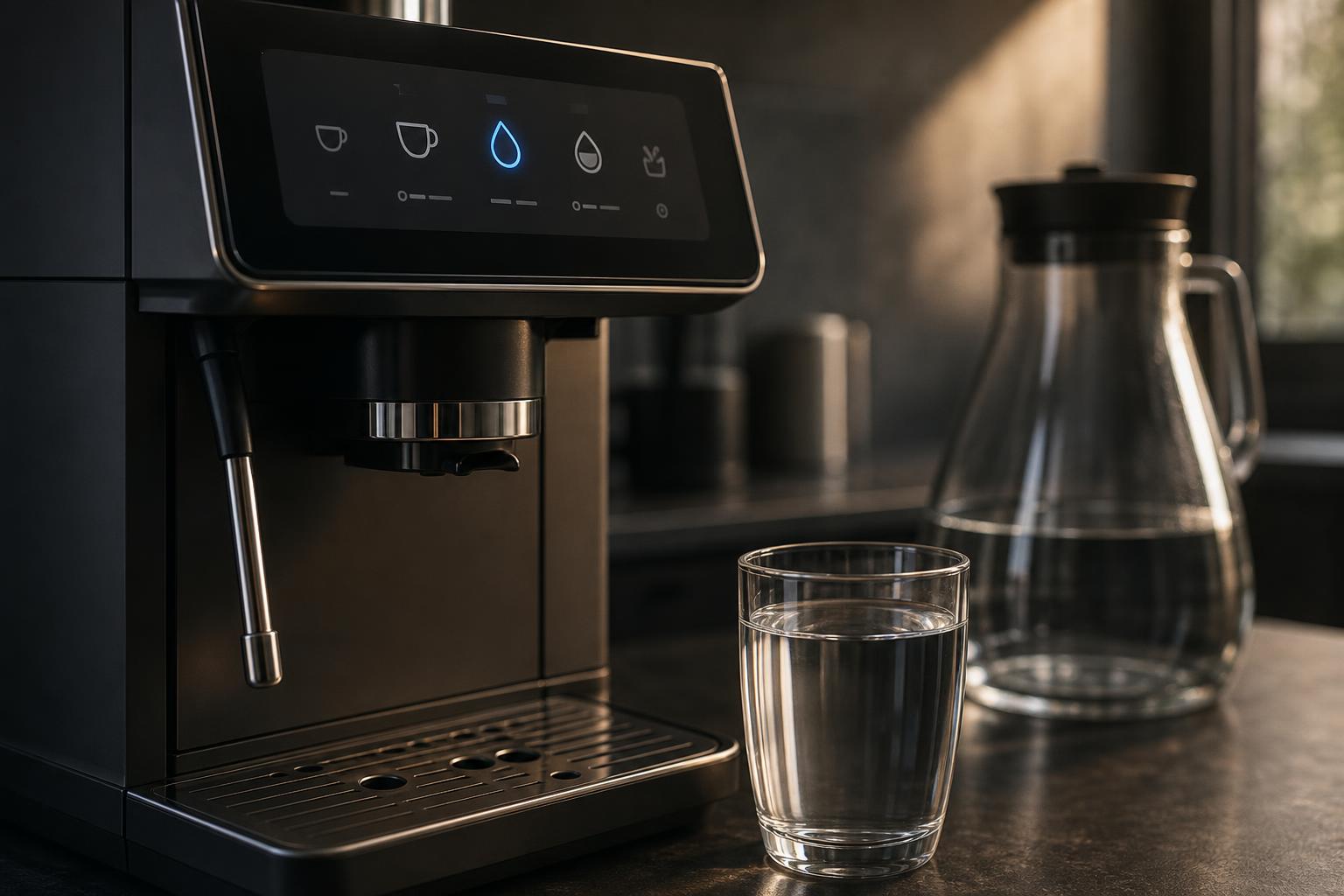
Water is one of the main ingredients in espresso, but it is easy to overlook when choosing beans or setting up a machine. The right water can support a…
Water is one of the main ingredients in espresso, but it is easy to overlook when choosing beans or setting up a machine. The right water can support a balanced-tasting shot and help limit limescale; the wrong choice may affect flavour or put extra strain on your equipment. The best water for home espresso depends on your local supply, your machine and the water’s mineral content.
Why water quality matters for home espresso
An espresso is mostly water, so its taste can influence the cup just as noticeably as the coffee itself. Water also interacts with the soluble compounds in coffee during brewing. If it tastes strongly of chlorine, minerals or other flavours, those may be more apparent in the finished espresso.
Water quality matters for your equipment, too. Minerals in hard water can collect as limescale inside a machine, particularly in parts that heat water. Over time, scale may affect performance and make maintenance more involved. Very low-mineral water presents a different concern: some machines are not designed to operate with it, and it may not produce the flavour you want.
There is no single water recipe that suits every coffee, machine and location. A practical starting point is to use clean-tasting water, understand its hardness and alkalinity, and follow the water guidance in your espresso machine’s manual.
Explore the related selection here: Coffee beans.
Explore the related selection here: Tiramisu Coffee Recipe: Make It at Home.
Explore the related selection here: Tiramisu Coffee at Home: An Easy Alcohol-Free Recipe.
Explore the related selection here: Pressurised vs Non-Pressurised Espresso Baskets.
How minerals, hardness and alkalinity affect espresso
Mineral content in coffee water influences both flavour and brewing. Calcium and magnesium are among the minerals associated with water hardness. They can affect how coffee compounds dissolve, while excessive hardness can increase the likelihood of scale forming inside a machine.
Hardness usually refers to the amount of calcium and magnesium in the water. If your area has hard water, scale may form more readily on kettles and other heated appliances. If the water is very soft, it may contain relatively little of these minerals. Neither description alone tells you everything about how the water will taste or how it will behave in a machine.
Alkalinity is a measure of how strongly water can resist changes in acidity. It is often linked to bicarbonate in drinking water. In coffee, too much alkalinity may make a cup seem flatter or less lively, while very low alkalinity may leave it tasting sharp. The effect depends on the coffee and brewing conditions, so treat these as useful tendencies rather than guaranteed outcomes.
Total dissolved solids (TDS) describes the combined amount of dissolved material in water. It can be a helpful broad indicator, but it does not identify which minerals are present. Two waters with a similar TDS reading may behave differently in an espresso machine or produce different-tasting coffee.
For espresso, consider the overall balance: flavour, hardness, alkalinity and your machine’s requirements. A TDS reading on its own cannot confirm that water is suitable.
Can you use tap water in an espresso machine?
Often, yes—but tap water varies from place to place. In some areas it tastes clean and has a suitable mineral balance. In others, it may be noticeably hard, heavily treated or simply not to your taste. That means “tap water for espresso” is not a universal yes or no.
Try your tap water first, particularly if you already enjoy its taste. If a kettle develops scale quickly, that is a useful warning that your water may be hard, though it is not a precise test. Check your water supplier’s information for local hardness figures, then compare those with the instructions for your machine.
Also consider how the water tastes cold and at room temperature. If it has a strong chlorine or mineral taste, it may affect your espresso. Leaving water to stand is not a dependable solution for every treatment or supply; if the flavour is unpleasant, consider an appropriate filter or another water option.
Do not assume that a machine’s built-in filter makes every tap supply suitable. Filters have specific purposes and capacities, and they need to be fitted and replaced as directed. If your machine has a water-softening cartridge or a recommended hardness setting, follow the manufacturer’s instructions.
Explore the related selection here: Italian coffee.
Filtered, bottled or remineralised water: what are the options?
There are several ways to improve or manage espresso water. The most suitable choice depends on what is wrong with your current supply and what your machine allows.
Filtered water
A jug or plumbed-in filter can improve taste and, depending on its design, reduce certain substances or some scale-forming minerals. Not all filters do the same job. Check the product details to see what it is intended to reduce, how it should be used and when it needs replacing. Filtered water is not automatically ideal for espresso, so check hardness and the machine manual as well.
Bottled water
Bottled water can be a practical alternative if tap water tastes unpleasant or is unsuitable for your machine. Read the label rather than choosing by brand or marketing alone. Mineral composition varies: some bottled waters are quite highly mineralised, while others contain very little. Look for a composition that fits your machine’s guidance, and remember that bottled water may still contribute to scale.
Remineralised or purpose-made water
Some home baristas use water made by adding measured minerals to a low-mineral base. This gives more control, but it requires careful preparation and accurate measurement. Follow the instructions for the chosen product and confirm that the resulting water is permitted by your machine’s manufacturer.
Distilled or demineralised water
Avoid using distilled or demineralised water by default. With very few dissolved minerals, it may not be suitable for some machines and may not give the flavour balance you want. Use it only if your machine manufacturer specifically allows it, including any instructions about remineralisation.
Whichever option you choose, consistency helps. If you change water source, give the machine time to use the new supply and taste a few shots before making other brewing adjustments.
How to choose water for your location and machine
A confident choice starts with two checks: your local water and your machine’s requirements.
1. Read the manual first. Look for guidance on water hardness, suitable water types, built-in filters and descaling. Some machines have specific limits or procedures. These instructions take priority over general advice.
2. Find out what your tap water is like. Your water supplier may publish a hardness range or local water-quality information. If you move house, do not assume the new supply is the same as the old one.
3. Check the taste. Water that tastes clean is a sensible starting point. A strong flavour may carry through into espresso.
4. Choose a treatment for a specific reason. If the water is hard, look for a filter or other solution designed to address hardness and compatible with your machine. If the taste is the issue, choose a treatment intended to improve that taste.
5. Read bottled-water labels. Compare mineral information rather than relying on labels such as “spring” or “natural” as a guide to machine suitability.
6. Keep the choice manageable. A reliable local supply and a filter maintained as directed may be simpler than mixing water at home. If you do make your own, measure carefully and keep notes.
For home baristas who adjust recipes, change one variable at a time. If a shot tastes different after you change the water, keep the coffee dose and other settings steady while you assess it.
Simple ways to check your water and care for your espresso machine
You do not need laboratory equipment to make a better-informed choice. Start with your water supplier’s published information and your machine’s manual. A basic hardness test strip can offer a rough indication, but follow its instructions and treat the result as a guide, not a complete water analysis.
A handheld TDS meter measures dissolved solids, not the specific minerals or alkalinity. It can help compare two waters, but it cannot by itself determine whether either one is suitable for your machine. For more detailed information, use a test that measures the relevant parameters or consult your local water supplier.
For everyday care:
- Use fresh water from a clean container, and avoid leaving water sitting in the reservoir for extended periods.
- Clean the reservoir and other removable water-contact parts as the manufacturer directs.
- Replace filter cartridges on the schedule and usage limits specified by their maker.
- Follow the machine’s instructions for descaling. Do not descale automatically or use a product that the manufacturer does not approve.
- If your machine’s performance changes, or you see signs of scale, check the manual and contact the manufacturer or a qualified service professional where appropriate.
Limescale prevention begins with choosing suitable water, but it does not remove the need for routine maintenance. Keeping a note of your water source and filter changes can make that routine easier.
Common questions about water for home espresso
What is the best water for home espresso?
The best water for home espresso is clean-tasting and compatible with your machine, with a mineral balance that supports the flavour you enjoy without creating an avoidable scale problem. Check local water information and your machine’s instructions before settling on a source.
Is soft water better for espresso?
Not necessarily. Soft water may reduce some scale concerns, but very low-mineral water can be unsuitable for certain machines and may not taste balanced in coffee. Consider alkalinity and the machine’s requirements as well as hardness.
Is filtered water always suitable for an espresso machine?
No. Filters differ in what they remove, and filtered water can still be too hard or too low in minerals for a particular machine. Check the filter’s purpose and the machine manual.
How can I help prevent limescale in an espresso machine?
Use water appropriate for your local supply and machine, maintain any filter correctly, and follow the manufacturer’s cleaning and descaling schedule. If you are unsure about your water’s hardness, check local guidance or use a suitable test.
Can I use bottled water for espresso?
You can, if its composition is suitable for your machine. Check the mineral information on the label and avoid assuming that every bottled water is low in scale-forming minerals. Bottled water is an option, not a guarantee of compatibility.
Does water affect espresso flavour?
Yes. Water’s taste and mineral composition can influence how an espresso tastes. If you change water, keep your coffee and brewing settings consistent while you compare the results.
For a practical next step, check your machine’s water guidance and your local water-hardness information, then choose the simplest compatible option. A considered water choice can support better-tasting espresso and make equipment care more predictable—without expecting one type of water to work everywhere.